Commercial Soil Support
Commercial turf takes steady pressure from foot traffic, mowing equipment, deliveries, events, and regular property use. Over time, the ground can become hard enough to limit how easily water, air, and nutrients move into the root zone.
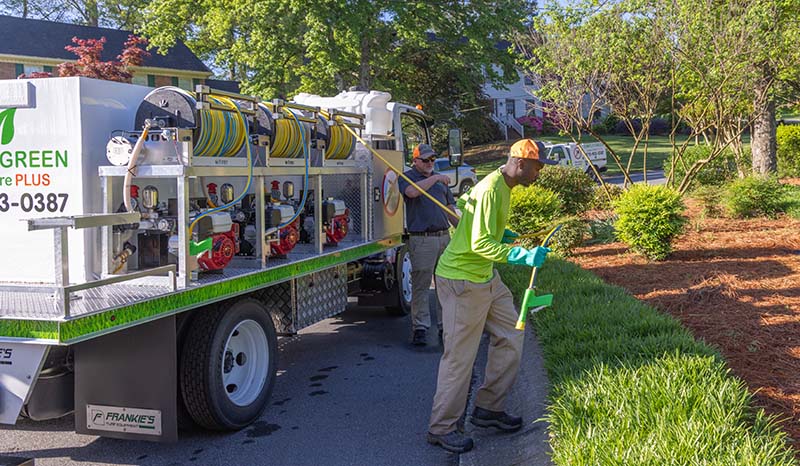
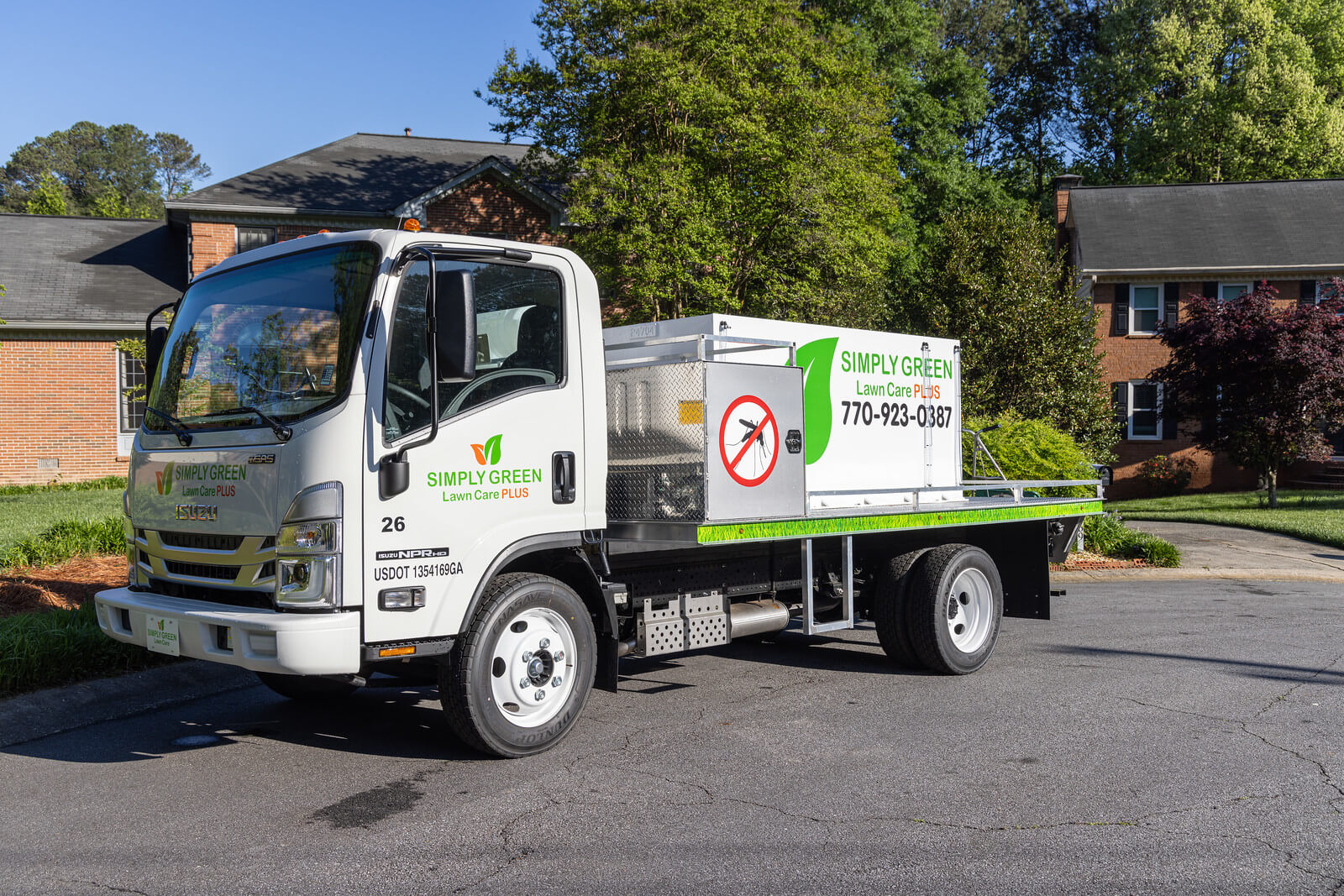
Simply Green provides commercial liquid aeration in Atlanta without pulling soil plugs or running mechanical tines through the ground. The sprayed treatment reaches suitable turf beside curbs, signs, landscape beds, fences, and other areas that a core aerator may not cover easily. It also avoids leaving plugs across active commercial spaces.
Open Compacted Turf Soil
Water running across the grass, thin turf near walkways, and soil that feels hard underfoot can point to compaction. The problem is common around Atlanta commercial properties, where clay-heavy soil is pressed by routine foot traffic, mowing equipment, utility work, and landscape crews. Busy sections often tighten faster than protected lawn areas.
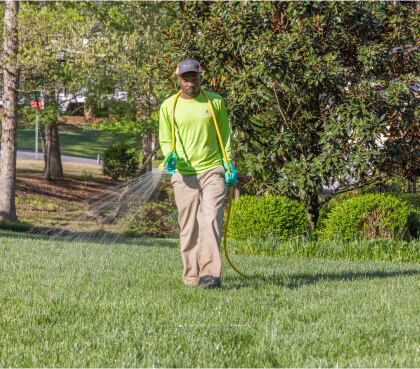
Simply Green applies a liquid blend of humates, kelp, soil conditioners, and micronutrients across suitable commercial turf. The treatment works in the soil over time to support better water, air, and nutrient movement. Since the service does not remove cores, entrances, common areas, tenant spaces, and street-facing turf are not left covered with soil plugs.
Our Six-Step Soil Plan
We start with the sections where the grass is thin, water runs off, or the ground has become noticeably firm. High-traffic routes, lawn edges, slopes, entrances, courtyards, and turf near parking lots usually deserve a closer look.
Hard soil is one possible cause of weak grass, but it is not the only one. Irrigation gaps, deep shade, drainage trouble, insects, disease, and mower damage can create similar symptoms. The property is reviewed first so liquid aeration is not presented as the answer to an unrelated problem.
Liquid aeration is scheduled while the turf is actively growing. Bermuda and Zoysia follow a warm-season cycle, while fescue grows most strongly during cooler parts of the year.
Grass type matters because active turf is better placed to respond to improved soil conditions. Mixed commercial properties may have separate sections that need different timing.
The property contact identifies locked gates, restricted sections, busy entrances, outdoor seating, tenant areas, and other access concerns. We also confirm which turf areas receive the most traffic or have shown repeated water problems.
Liquid application makes it easier to reach narrow sections beside curbs, fences, signs, and landscape features. Even so, parked equipment, temporary fencing, construction materials, or locked areas can prevent full coverage.
The liquid aeration blend is sprayed across suitable turf areas. No mechanical tines are entering the ground and no cores left on the surface.
Because the product is applied as a liquid, coverage can extend close to fixed features and into smaller lawn sections. The application still requires clear access to the grass, so leaves, stored materials, and other surface obstructions should be moved before service, if requested.
The application needs to move from the grass surface into the soil. Watering instructions are provided after service based on the treatment, weather, and property conditions.
If another vendor manages irrigation, the property contact should pass along the instructions. A working schedule and even sprinkler coverage help move the treatment into the areas where it is intended to work.
Liquid aeration works gradually. The lawn will not be covered with holes or plugs that show where the work was completed.
Simply Green continues to watch water movement, turf density, dry areas, and signs of compaction during later lawn visits. If mechanical core aeration or another service would better fit part of the property, that can be discussed separately.
What the Treatment Does?
Compacted ground contains less open space for water and air to move through. Roots may remain near the surface, and irrigation can run off before enough moisture reaches the soil.
Simply Green’s liquid aeration blend is designed to work within the soil rather than mechanically removing it. The treatment includes:
Liquid aeration is not fertilizer, although some ingredients support soil and root activity. It does not repair broken irrigation, redirect stormwater, or remove a thick layer of standing water. Its purpose is to improve conditions within compacted turf soil.
The University of Georgia Cooperative Extension notes that aeration can help reduce compaction and improve the movement of oxygen, nutrients, and water in lawns with heavy clay content.
Less Disruption on Site
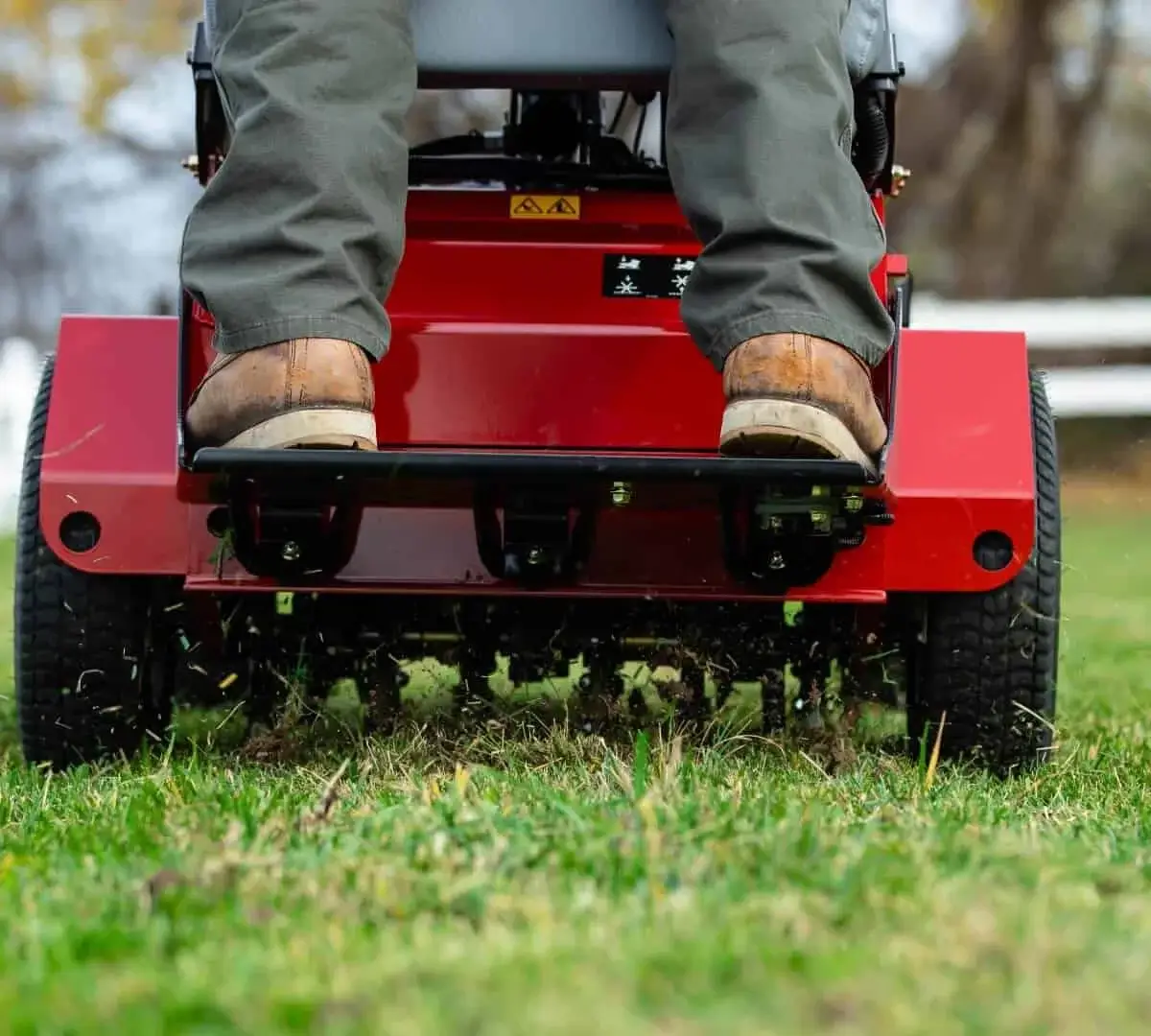
Mechanical core aeration is useful, but it is not always the easiest fit for an active commercial property. Soil plugs remain on the surface, sprinkler heads and shallow lines must be marked, and the machine cannot reach every narrow turf section.
Liquid aeration offers a different option:
Entrances, courtyards, common spaces, and street-facing turf stay free of scattered cores.
The application does not puncture the ground, reducing concern around shallow irrigation components and landscape wiring.
The sprayer can reach turf beside curbs, signs, fences, buildings, and landscape beds.
The treatment does not require flagging every sprinkler head and shallow line for mechanical equipment. Turf still needs to be clear and accessible.
The property team does not need to explain or manage the temporary appearance of cores after service.
Busy areas can receive soil care without a machine repeatedly crossing the ground.
Fit the Property Layout
Liquid aeration works well where site access, appearance, or fixed features make mechanical aeration less practical.
Small turf sections around signs and main entrances can be difficult to reach with a core aerator. Liquid application covers these spaces without leaving plugs in a high-visibility area.
Courtyards, pet routes, playground surroundings, and shared lawns receive regular traffic. Plug-free treatment keeps the surface cleaner once re-entry instructions have been met.
Employees, visitors, and patients may cross the lawn or use outdoor seating throughout the day. Liquid aeration provides soil support without leaving loose cores near walkways and entrances.
Grass near patios, storefronts, signs, and parking areas is often narrow or divided by hard surfaces. Sprayed treatment can reach these sections more easily.
Large grounds may include fenced areas, utility zones, drainage sections, and grass near loading routes. Liquid application reduces the need to move mechanical aeration equipment across the entire site.
Repeated walking, mowing, cart traffic, and maintenance activities can compact certain routes faster than the rest of the property. These areas may need more frequent attention based on how the site is used.
Know What It Will Not Fix
Water sitting on the surface does not always mean compaction is the only issue. A low section may collect runoff from the building. A damaged sprinkler may flood one zone. Heavy shade can keep soil moist long after the rest of the property dries out.
This distinction saves the property manager from paying for repeated soil treatments when another condition is causing the visible damage.
Liquid or Core Aeration
Liquid aeration is applied with a sprayer and works in the soil over time. Core aeration uses a machine to remove small plugs, creating immediate openings in the ground.
Liquid aeration is often the better fit when:
Core aeration may still be appropriate for heavily compacted turf that needs mechanical openings. Some properties use both methods as part of a longer soil-management plan.
Simply Green considers the turf, soil, site access, and intended use before recommending one approach. The property does not benefit from choosing a method solely for convenience if it does not match the ground conditions.
Plug-Free Soil Support
Commercial turf can become compacted through foot traffic, mowing equipment, events, and ordinary property use. Simply Green provides liquid aeration without bringing mechanical tines into the ground or leaving soil plugs across active areas.
Simply Green works with Atlanta’s clay-heavy soil and common commercial grasses. The service gives managed properties a practical way to support compacted turf with less surface disruption.
More Commercial Turf Care
Liquid aeration supports the soil. Services are recommended according to the condition found. Liquid aeration does not replace weed control, fertilizer, insect treatment, irrigation work, or drainage repair.
Commercial weed control and fertilization provides scheduled nutrition and weed management for Bermuda, Zoysia, and fescue.
Commercial Hydretain Water Saver helps keep available moisture near turf and landscape roots.
Commercial armyworm and grub control treats insects that damage grass blades or roots.
Commercial plant health care provides seven seasonal visits for suitable ornamental trees and shrubs.
Commercial fire ant control addresses colonies in suitable lawn and landscape areas.
Commercial mosquito control treats likely breeding and resting areas every three weeks.
Commercial Aeration FAQs
Hard soil, recurring runoff, and thin high-traffic turf call for more than another watering cycle. Simply Green’s commercial liquid aeration reaches compacted lawn areas without mechanical tines, soil plugs, or unnecessary disruption around busy spaces.
Tell us where the ground feels hard, where water stops soaking in, and which areas are difficult to reach with equipment. We will review the property and determine whether liquid aeration fits the turf, soil, and operating needs of the site.