Year-Round Lawn and Plant Care Guide | Georgia

Seasonal Lawn and Landscape Care

How to Keep Your Lawn and Plants Healthy Year-Round

A healthy landscape is built throughout the year not during one round of spring cleanup. Georgia’s changing temperatures, summer heat, clay- heavy soil, and seasonal pest activity can affect lawns, shrubs, trees, and ornamental plants in different ways.

Begin With the Basics

Healthy Plants Start With Healthy Growing Conditions

Discolored leaves, thinning grass, weak growth, and recurring pests do not always mean a plant needs another treatment. These symptoms may also develop because of poor drainage, excessive watering, compacted soil, incorrect mowing, insufficient sunlight, or unbalanced fertility.

Before taking action, consider:

The lawn or plant species

Available sunlight

Soil drainage and compaction

Recent rainfall and irrigation

Soil pH and nutrient levels

Signs of insects or disease

Recent maintenance or construction activity

Understanding the cause helps you avoid treating the wrong problem. It also makes seasonal lawn and plant care more effective.

Prepare for Active Growth

Spring Lawn and Plant Care

Spring is the time to clean up winter debris and inspect your lawn for compaction, thatch, drainage problems, and bare areas. Bermuda and Zoysia may benefit from aeration after active growth begins, while Tall Fescue is generally aerated and seeded in fall. Apply pre-emergent before targeted summer weeds germinate, but coordinate treatment with any seeding plans.

Spring priorities include:

  • Mow at the correct height for your grass type.
  • Remove no more than one-third of the blade.
  • Sharpen mower blades for a cleaner cut.
  • Fertilize warm-season turf after it greens up.
  • Check irrigation coverage before summer.
  • Refresh mulch without piling it against plants.
  • Inspect new growth for insects, disease, or discoloration.

Allow cold-damaged plants time to produce new growth before removing branches that may still recover.

Manage Heat and Stress

Summer Lawn and Plant Care

Georgia’s heat can stress lawns, trees, and ornamental plants. Water according to rainfall and soil moisture rather than following the same schedule every week.

Summer priorities include:

  • Water early in the day when practical.
  • Direct water toward the root zone.
  • Adjust irrigation after rainfall.
  • Check for leaks, runoff, and standing water.
  • Continue mowing at the proper height.
  • Raise the mowing height during severe heat.
  • Avoid unnecessary fertilizer during drought stress.

Inspect the landscape for chewed leaves, webbing, spots, thinning grass, or unusual discoloration. Because both dry and saturated soil can cause wilting, check moisture before watering.

Our residential plant health care service can help address eligible insect, disease, fertility, and plant-stress concerns.


Recover and Prepare

Autumn Lawn and Plant Care

Autumn is the time to address summer damage and prepare the landscape for cooler weather. Remove heavy leaf coverage before it blocks sunlight and traps moisture against the lawn. Fall is also the primary season for Fescue aeration and seeding. Bermuda and Zoysia require a different seasonal plan and should not automatically be aerated or seeded in fall.

Autumn priorities include:

  • Aerate and seed eligible Tall Fescue lawns.
  • Remove or mulch fallen leaves.
  • Continue watering during dry periods.
  • Apply pre-emergent for targeted winter weeds.
  • Test the soil before adding lime or fertilizer.
  • Replenish mulch in planting beds.
  • Inspect trees for damaged branches.

Continue monitoring newly planted trees and shrubs. Apply fertilizer only when it is appropriate for the plant, grass type, and soil conditions.

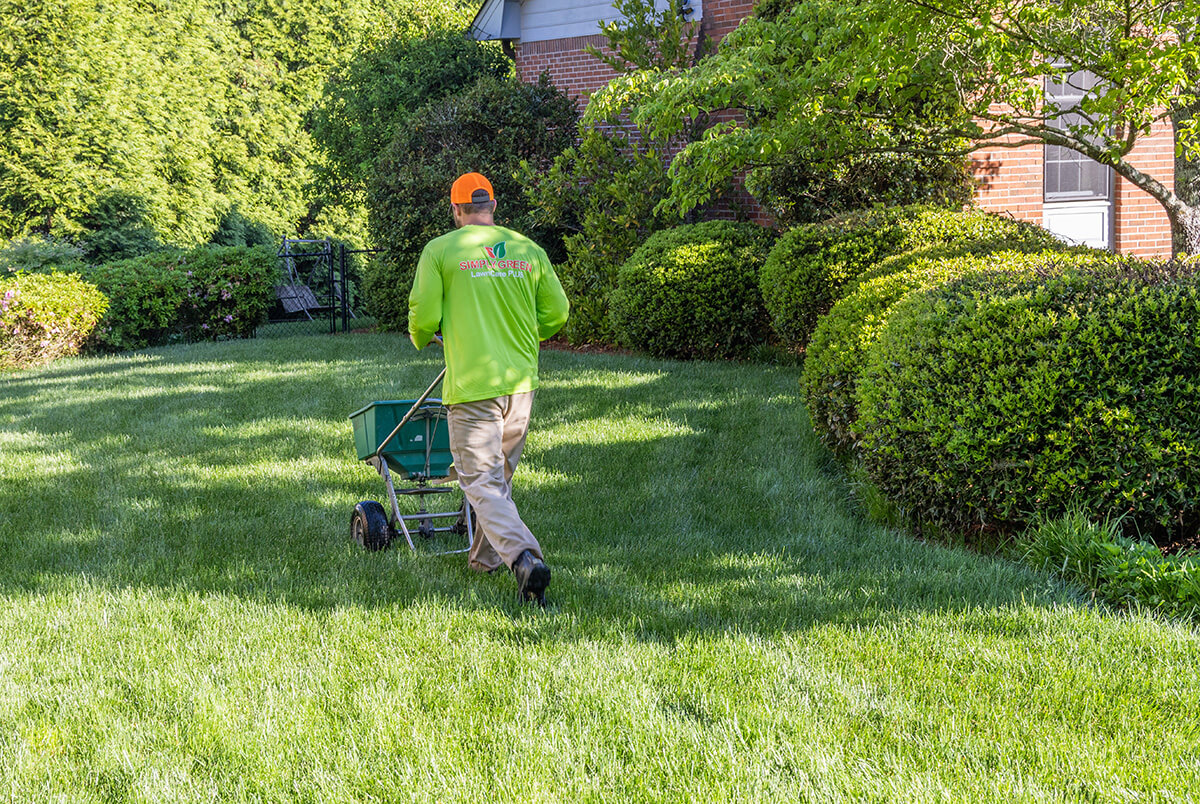
Picture of a Simply Green Technician fertilizing a lawn

Protect During Dormancy

Winter Lawn and Plant Care

Winter growth may slow, but your landscape still needs attention. Remove debris, monitor moisture, and watch for storm or cold damage.

Winter priorities include:

  • Remove fallen branches and heavy leaf coverage.
  • Monitor soil moisture during dry weather.
  • Check drainage after heavy rain.
  • Protect sensitive plants before severe cold.
  • Avoid heavy traffic on dormant turf.
  • Maintain mulch without covering trunks.
  • Review areas that struggled during the year.

Remove dead or hazardous branches when it is safe to do so. Check the plant’s flowering schedule before pruning healthy growth, since winter pruning can remove buds from some spring-flowering shrubs.

After a hard freeze, wait until the damage becomes clear before pruning extensively.

Watch for Changes Early

Signs Your Plants May Need Professional Attention

Regularly walking through your property is one of the simplest ways to protect your landscape. Look beyond individual damaged leaves and watch for changes affecting an entire plant or multiple plants in the same area.

Consider requesting a professional evaluation if you notice:

Before taking action, consider:

Rapid or unexplained leaf loss

Recurring spots or discoloration

Multiple dying branches

Persistent wilting despite moist soil

Significant insect activity

Sticky leaves or black surface growth

Decline spreading between nearby plants

Mushrooms, cavities, or decay near a trunk

Repeated problems in the same landscape bed

Not every symptom requires a pesticide or fertilizer. Sometimes the right response is adjusting irrigation, correcting drainage, improving mulch placement, or selecting a plant better suited to the location.

Care Built Around Your Property

Residential and Commercial Plant Health Care

Simply Green Lawn Care provides seasonal lawn and plant health services throughout Metro Atlanta and surrounding communities.

Our residential plant health care supports eligible trees, shrubs, and ornamental plants around homes. Depending on the property and plant needs, recommendations may address insects, diseases, fertility, and environmental stress.

We also offer commercial plant health care for managed landscapes, common areas, community properties, and other commercial environments.

Explore all our residential lawn care services or review our complete range of commercial lawn and landscape services.

Give Your Lawn and Plants the Right Care in Every Season

A healthy landscape does not come from performing every service at the same time each year. It comes from understanding your grass and plants, watching how they respond to changing conditions, and applying the right care when it is needed.

If your lawn, shrubs, or ornamental plants are showing signs of stress, Simply Green Lawn Care can help evaluate the property and recommend an appropriate seasonal care plan.