

Residential Soil Care
Simply Green liquid aeration loosens hard soil so water, air, and nutrients can move more easily toward your lawn’s roots without pulling soil plugs or leaving holes across the yard.
Your Liquid Aeration Plan
We check the lawn and soil first to determine where compaction is affecting the turf and whether liquid aeration is the right treatment.
Our lawn care experts look for thin grass, hard ground, standing water, runoff, and areas that are not responding well to regular lawn care.
Frequently used areas, slopes, gates, play spaces, and other parts of the yard may become compacted sooner than surrounding turf. We check these areas closely for hard soil and struggling grass.
Liquid aeration works best while the grass is actively growing. Grass type, lawn condition, and current weather are considered when scheduling treatment.
The liquid treatment is applied evenly across suitable lawn areas. There are no soil plugs scattered over the grass, holes left behind, or heavy aeration equipment moving across the yard.
Water carries the treatment into the soil after application. Simply Green provides clear instructions for when to water and how much water the lawn needs.
Many lawns need liquid aeration once a year. Lawns that repeatedly develop hard soil may need treatment twice a year. When liquid aeration is not the right approach for your lawn, our lawn care experts can recommend an alternative.
Where Liquid Aeration Can Help
Compaction does not always affect an entire lawn evenly. Certain parts of a property can become dense faster because of traffic, slope, limited access, or repeated use. Liquid aeration can be useful when those conditions are making it harder for water, air, and nutrients to move through the soil.
Grass around gates, walkways, play areas, and other frequently used sections may develop harder soil sooner than the rest of the yard. Repeated foot traffic and lawn activity can press the soil together over time.
Liquid aeration can help loosen suitable compacted areas without pulling soil plugs or leaving aeration holes across the lawn.
When soil becomes dense, rainfall or irrigation may move across the surface instead of soaking into the root zone. This can be especially noticeable on sloped sections of the property.
Liquid aeration can improve movement through compacted soil, although major drainage problems still require separate attention.
Side yards, fence lines, lawn edges, and other tight spaces can be difficult to reach with larger core-aeration equipment. Liquid aeration is applied across the turf without running heavy aeration machinery over those areas.
This can make it a practical option for suitable compacted sections where equipment access is limited.
Core aeration physically pushes tines into the ground. Properties with shallow sprinkler lines, invisible pet fences, or other shallow lines may require extra consideration before mechanical aeration.
Because liquid aeration does not physically remove soil plugs, it provides another option for suitable lawns where avoiding ground punctures is important.
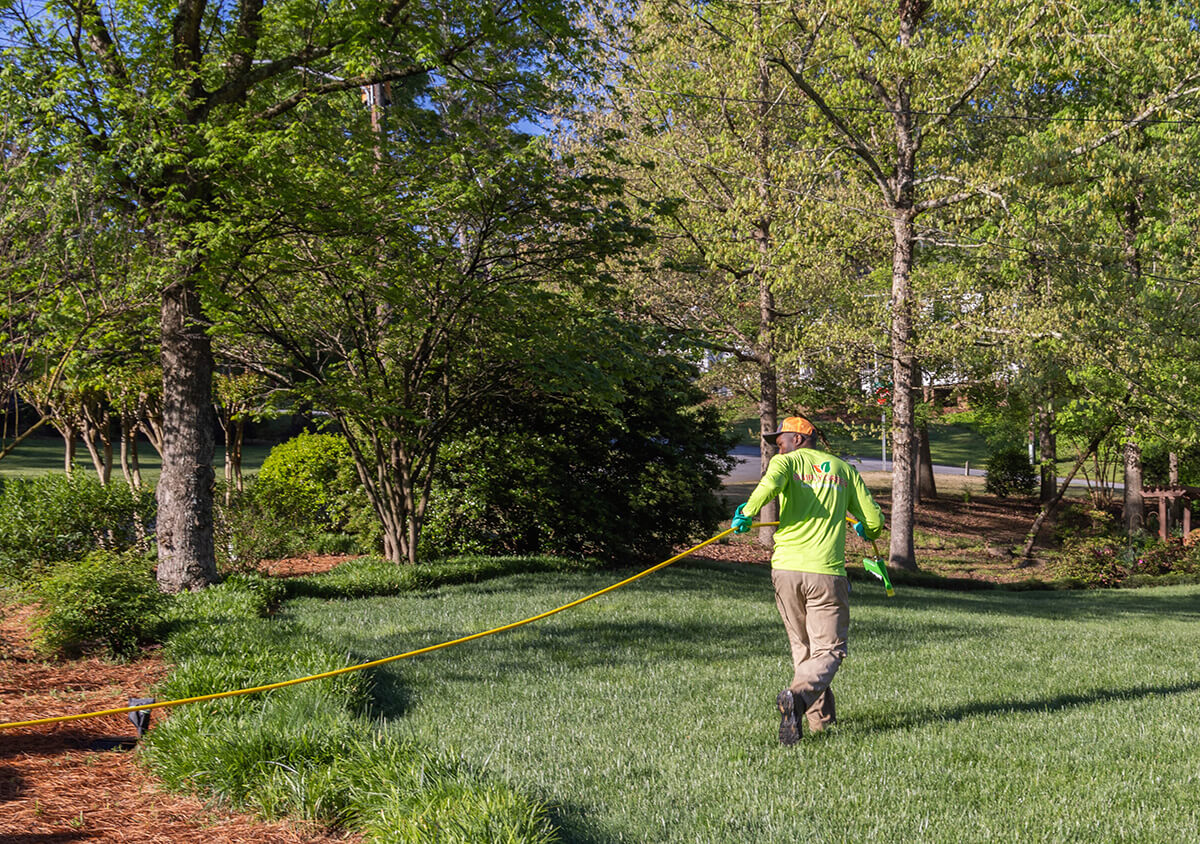
There are no soil plugs to collect or holes left across the lawn after treatment. Follow the watering and regular lawn care instructions provided after service.
Water the lawn according to the instructions provided after treatment. Adding more water than recommended will not make the application work faster.
Continue mowing at the appropriate height for your grass type unless our lawn care experts provide different instructions based on the lawn’s condition.
Liquid aeration does not replace fertilization, weed control, mowing, or other seasonal lawn care. Continue your regular lawn care program after treatment.
Avoid driving vehicles or heavy equipment across wet areas when possible. Repeated weight on wet Georgia clay can compact the soil again.
An area that continues to hold water, remains unusually hard, or thins after treatment may have another problem. Drainage, sprinkler coverage, insects, disease, or other lawn conditions may require separate attention.
Protect the Soil Between Visits
Liquid aeration can loosen hard soil, but everyday use of the yard can gradually compact it again. A few practical habits can help reduce repeated pressure on the same areas and make it easier to see when a section of the lawn needs another look.
Wet clay is easier to compress. When possible, keep vehicles, trailers, and heavy equipment off saturated lawn areas until the ground has had time to dry.
Gates, play areas, mower routes, narrow side yards, and other frequently used sections can harden sooner than the rest of the lawn. Watch these locations for thinning grass, hard ground, or runoff.
Continue proper mowing, watering, weed control, and fertilization for your grass type. Liquid aeration improves soil conditions, but it does not replace the other care the turf needs through the season.
Support Healthy Root Growth
Grass roots need access to air, water, and nutrients below the surface. Compacted soil can restrict how easily they move through the ground.
Liquid aeration loosens the soil in the root zone, allowing air and nutrients to move through it more easily.
The treatment can also address excess thatch. Thatch is the layer of old grass and plant material between the green grass and the soil. A small amount is normal, but a heavy layer can interfere with water movement.
Liquid aeration does not replace fertilization. Simply Green’s weed control and fertilization program provides seasonal lawn nutrition and weed management as a separate service.
Know What to Watch For
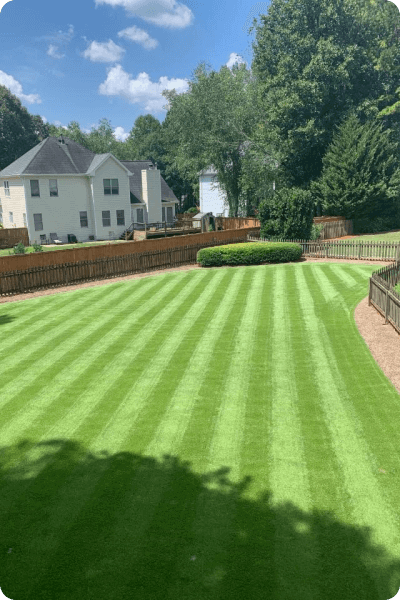
Liquid aeration works in the soil over time, so the lawn does not need to look dramatically different immediately after treatment. The first thing many homeowners notice is what is not left behind: there are no plugs to collect and no aeration holes across the yard.
If compaction has been slowing water movement, continue watching the treated areas during rainfall and irrigation. Soil condition, slope, drainage, and sprinkler coverage can all affect what happens at the surface.
Keep an eye on thin sections and areas that have struggled under regular lawn care. Liquid aeration improves soil conditions around the root zone, but grass still depends on proper nutrition, mowing, water, sunlight, and freedom from damaging insects or disease.
Standing water, persistent hard ground, or continued thinning can point to a separate issue. Let Simply Green know when a problem area continues so irrigation, drainage, pests, disease, or another cause can be considered.
Choose What Your Lawn Needs
Liquid and core aeration both address compacted soil, but they work differently. The condition of the lawn determines which method makes more sense.
Liquid aeration is applied across the lawn and works in the soil over time. It leaves no plugs or holes and can reach tighter areas where larger equipment may be difficult to use.
Core aeration physically removes small soil plugs, creating openings in the soil. It may be more appropriate when the soil is especially hard, or the lawn needs mechanical aeration.
Some lawns may need liquid aeration, while others are better suited to core aeration. In some cases, both may be appropriate.
Simply Green checks the lawn first and recommends the aeration method based on the soil and turf conditions.
Plan the Right Schedule
The right schedule depends on how quickly the soil compacts and whether the grass is actively growing. Simply Green checks turf condition, grass type, weather, and repeated traffic before recommending when to treat.
Lawn condition | Typical approach | Why it matters |
Actively growing lawn with recurring hard soil | Many lawns are treated once a year. | Annual treatment may be enough when compaction develops gradually. |
Areas that repeatedly compact from heavier use | Some lawns may need treatment twice a year. | Repeated traffic can cause certain sections to harden faster than the rest of the yard. |
Lawn with another major problem | Inspect the cause before scheduling aeration. | Drainage, irrigation, insects, disease, or another condition may need separate attention. |
Soil that is especially hard | Compare liquid and core aeration. | Mechanical core aeration may be more appropriate for some very hard soils. |
Know the Limits
Liquid aeration addresses compacted soil, but some lawn problems need a different correction. Knowing those limits can prevent unnecessary treatment and help the lawn receive the service that actually matches the cause.
Liquid aeration does not repair broken sprinklers or correct major drainage issues. If water is not reaching the lawn evenly or is consistently collecting because of drainage, that problem needs separate attention.
Thin or declining grass can be caused by insects, disease, watering problems, or other lawn conditions. Aeration will not correct those problems by itself, so the damaged area should be checked before assuming hard soil is the cause.
Some lawns are better suited to core aeration, especially when the soil is extremely hard or mechanical openings are needed. Simply Green can compare the soil and turf conditions and recommend the aeration approach that fits the lawn.
Local Lawn Care Experience
Simply Green has cared for Metro Atlanta lawns since 2004. Our lawn care experts understand the clay-heavy soil and growing conditions found throughout the area.
We check the lawn before recommending liquid aeration. Hard ground, runoff, standing water, thin turf, and other signs are considered, along with irrigation, drainage, insects, disease, and other possible lawn problems.
When compacted soil is part of the problem, liquid aeration provides an option without leaving plugs or holes across the yard. When another issue is affecting the grass, our lawn care experts can recommend what needs attention instead.
More Care for Your Lawn
Simply Green also provides services for other lawn, soil, plant, and pest problems around your property.
Common Aeration Questions
Here are answers to common questions about liquid aeration, treatment timing, watering, and how it compares with core aeration.
Simply Green liquid aeration loosens hard, compacted soil so water, air, and nutrients can move more easily toward the grass roots. Treatment is applied without pulling soil plugs, leaving aeration holes, or running heavy aeration equipment across the yard.
Call us today or request your personalized estimate online. Our lawn care experts can check the turf and soil, determine whether compaction is affecting your lawn, and recommend the right aeration approach.