
Relief for Compacted Soil
Simply Green liquid aeration loosens hard, compacted soil so water, air, and nutrients can move more easily toward the grass roots without leaving plugs or open holes across your commercial property.
The Liquid Aeration Process
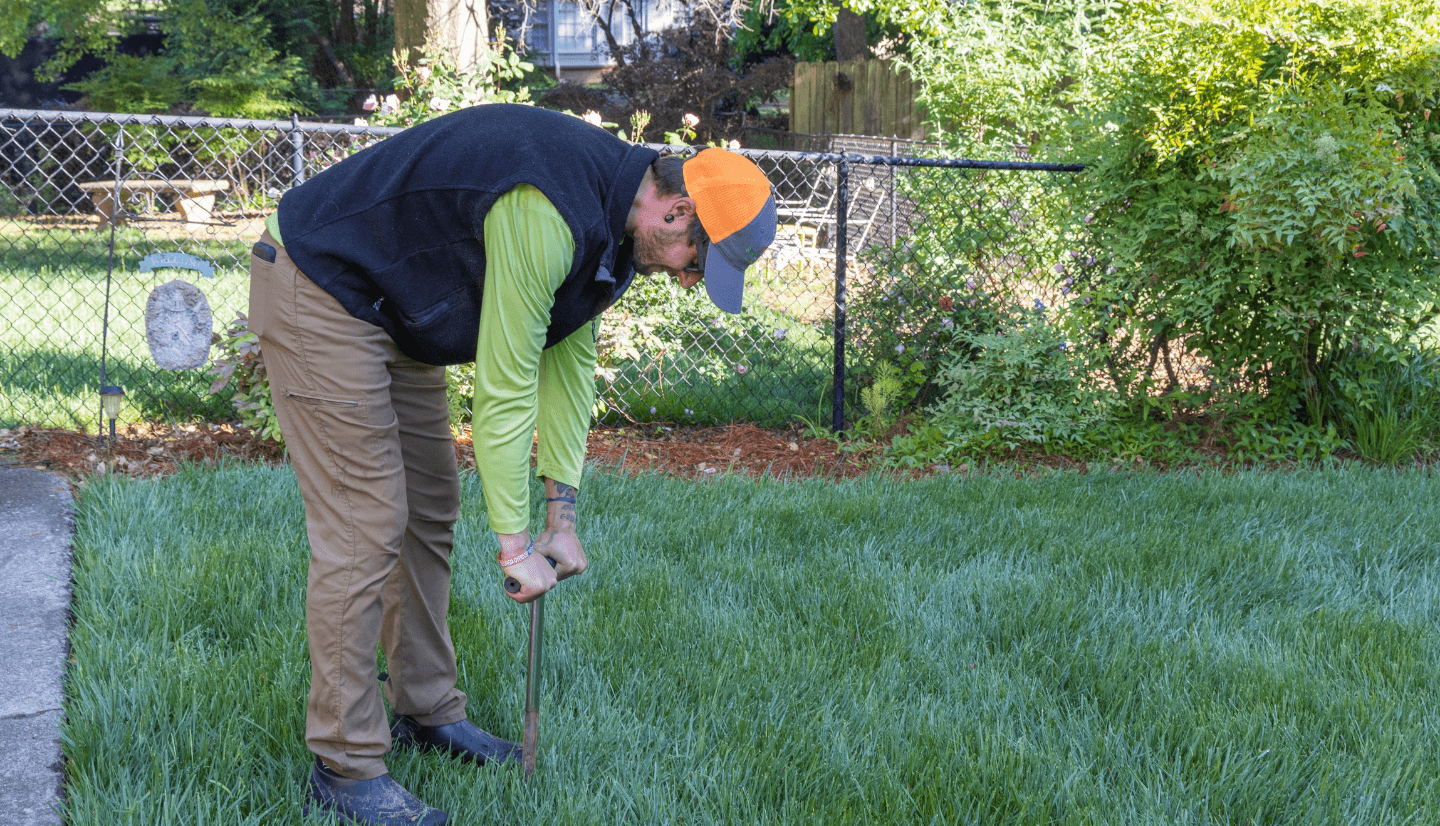
We check the turf and soil first. Grass type, soil condition, property use, and other lawn problems all matter when deciding where and when to treat.
We look for hard ground, thin grass, runoff, standing water, and other signs that may point to compacted soil. Irrigation, drainage, shade, and other possible causes are checked too.
Entrances, sidewalk edges, pet areas, event lawns, courtyards, and maintenance routes often receive more traffic. We check these areas closely for hard soil and turf struggling to grow.
Liquid aeration works best while the grass is actively growing. We consider the grass type, weather, soil condition, and property schedule when planning service.
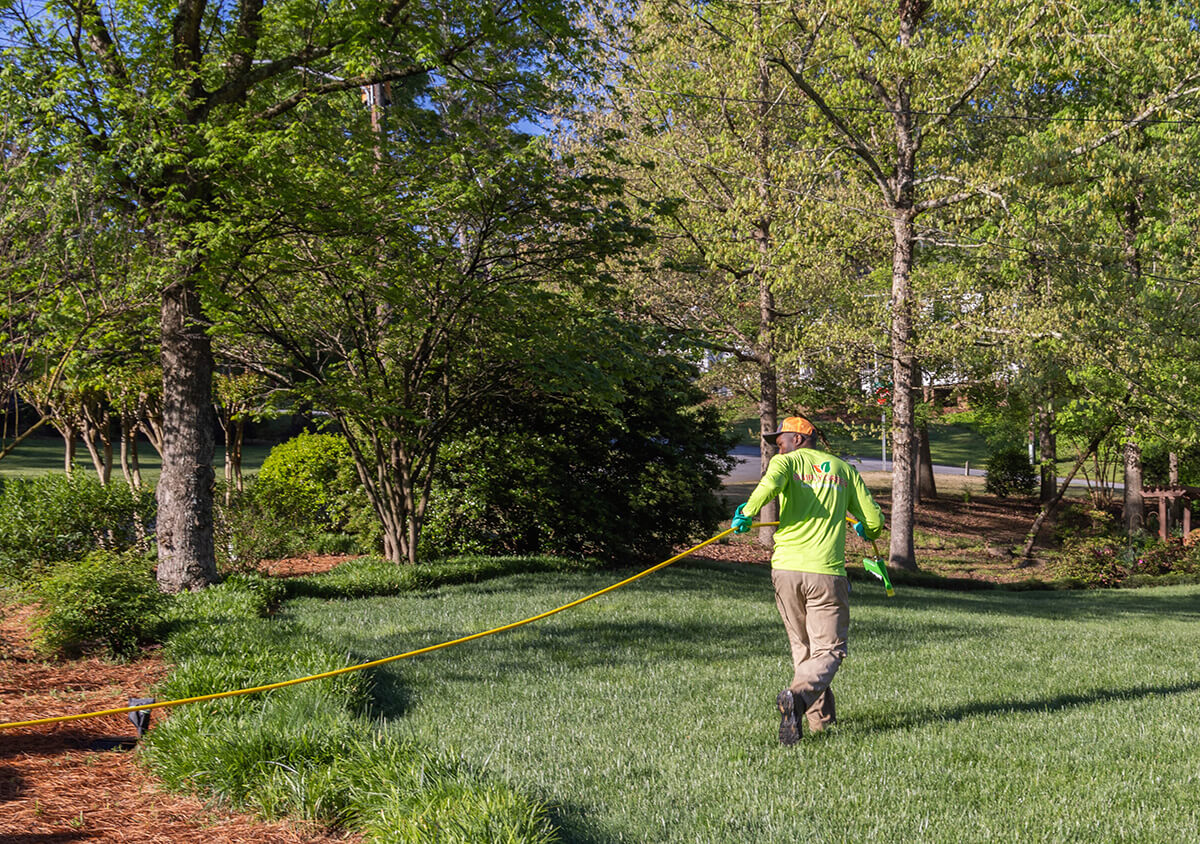
The treatment is mixed with water and sprayed evenly across the appropriate turf. Narrow areas around curbs, signs, fences, and landscape features can also be treated without bringing large equipment through every part of the lawn.
Water carries the treatment into the soil. We provide the watering instructions after service so the property team knows when and how much to water.
One annual treatment works well for many commercial lawns. Heavily used areas may need two applications. When core aeration or a combination of both methods makes more sense, we can recommend that instead.
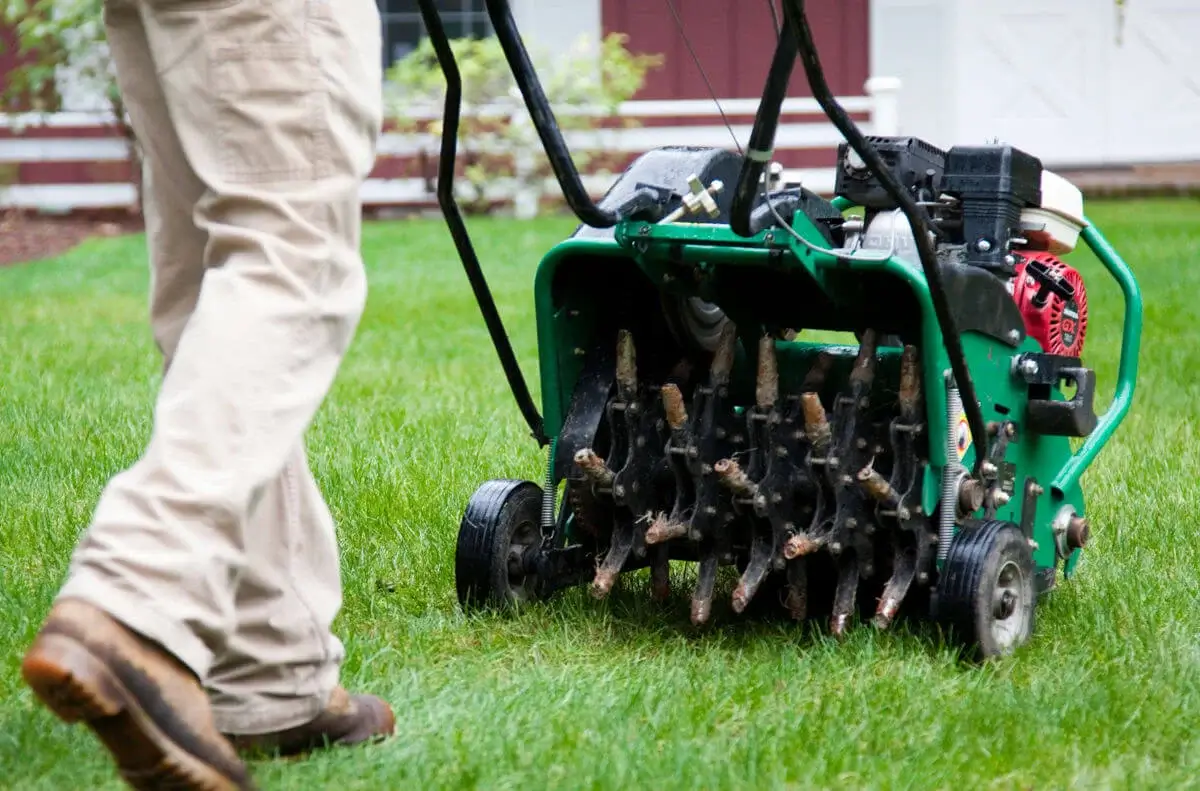
There are no soil plugs after liquid aeration. Follow the watering and lawn care instructions provided after service and share them with the teams responsible for the grounds.
Water the treated turf according to the schedule provided after service. Avoid excessive watering that creates unnecessary runoff.
Share watering, mowing, and access instructions with maintenance teams, landscapers, irrigation contractors, and others working on the property.
Keep an eye on areas that were hard, thin, or holding water before treatment. Continued problems may point to drainage, irrigation, shade, insects, disease, or another lawn issue.
A Practical Soil Management Plan
Commercial soil compaction is easiest to manage when the service starts with the cause of the turf problem, targets the areas that actually need soil improvement, and accounts for how the property will be used after treatment.
Hard ground, runoff, standing water, and thin turf can point to compaction, but irrigation, drainage, shade, insects, disease, and other lawn conditions can create similar symptoms. Simply Green checks the turf and surrounding conditions before recommending aeration.
Liquid aeration can be applied across suitable commercial turf, including narrow areas near curbs, signs, fences, entrances, and landscape features. The service loosens compacted soil without leaving soil plugs or open holes across the property.
The treatment needs to be watered into the soil, and repeated traffic can compact the same areas again. Property teams should follow watering instructions, watch heavily used turf, and reassess areas that repeatedly become hard or worn.
Best-Fit Commercial Properties
Liquid aeration can be a practical fit for commercial properties where compacted soil is limiting turf and where avoiding plugs, open holes, or large mechanical equipment is useful for day-to-day property operations.
Liquid aeration is not automatically the right choice for extremely hard soil or for turf problems caused mainly by drainage, irrigation, shade, insects, or disease. Those conditions may require core aeration or another service instead.
Choose the Right Aeration Approach
The first decision is whether hard soil is contributing to the problem. Thin grass or standing water alone does not confirm compaction, so irrigation, drainage, shade, and other turf conditions should be reviewed before scheduling treatment.
Liquid aeration works best while the grass is actively growing. Grass type, weather, current turf stress, and soil condition all matter when choosing the treatment window.
Liquid aeration avoids plugs and open holes and can reach tighter areas. Very hard ground may respond better to core aeration, and some commercial properties may benefit from both methods. The soil and turf condition should guide that choice.
Water carries the treatment into the soil after application. Property contacts should be able to share watering and access instructions with maintenance teams, landscapers, irrigation contractors, and other crews responsible for the grounds.
Plan the Right Service Schedule
Commercial liquid aeration is scheduled according to grass growth, soil condition, property use, and how quickly treated areas compact again. The same frequency is not necessary for every lawn area.
Service Point | Timing / Frequency | Commercial Planning Note |
Turf and soil review | Before treatment | Check hard ground, runoff, standing water, thin turf, irrigation, drainage, shade, and high-use areas before deciding whether aeration fits. |
Liquid aeration application | While the grass is actively growing | Schedule around grass type, weather, turf condition, and property access requirements. |
Water-in step | After application | Follow the watering instructions provided after service so the treatment can move into the soil without creating unnecessary runoff. |
Routine soil care | Often once per year | One annual treatment works well for many commercial lawns where compaction develops gradually. |
Higher-use turf | Some areas may need two applications per year | Entrances, pet areas, event lawns, equipment routes, and other heavily used sections may compact faster than the rest of the property. |
Reassessment | When hard soil or turf decline returns | Recheck whether compaction has returned or whether irrigation, drainage, insects, disease, shade, or another condition is causing the problem. |
Commercial Property Benefits
Liquid aeration loosens hard soil so water, air, and nutrients can move more easily toward the root zone. This can be useful when compacted commercial turf is limiting normal lawn care results.
The treatment is sprayed across suitable turf rather than mechanically removing soil cores. Entrances, walkways, shared lawns, and amenity areas are not left covered with aeration plugs after service.
Narrow sections near signs, curbs, fences, buildings, and landscape features can be treated without moving large core-aeration equipment through every part of the property.
Property contacts receive watering and access instructions that can be shared with grounds crews and contractors. This makes it easier to coordinate soil care with mowing, irrigation, maintenance routes, events, and normal property use.
Commercial liquid aeration pricing depends on the amount of turf being treated, property layout, soil condition, access, and whether all lawn areas need the same aeration approach. Simply Green provides a commercial estimate after reviewing the site and treatment scope.
Estimate Factor | What Is Reviewed |
Amount of turf | The total lawn area included in treatment and whether aeration is needed across the property or only in selected zones. |
Compaction severity | How hard the soil is, how widespread the problem appears to be, and whether some areas may need core aeration instead. |
High-use treatment zones | Entrances, amenity lawns, pet areas, event spaces, maintenance routes, and other sections that receive repeated traffic. |
Property layout and access | Narrow strips, curbs, signs, fences, gated areas, and other site conditions that affect how treatment is applied. |
| Watering and operational coordination | Irrigation schedules, maintenance crews, events, access restrictions, and other property requirements that need to be coordinated with service. |
Commercial Lawn Experience
Simply Green has cared for Metro Atlanta properties since 2004. We understand how Georgia clay can respond to regular foot traffic, equipment, rain, irrigation, and everyday commercial use.
We assess the turf and soil before recommending liquid aeration. When compaction is the problem, treatment can cover both larger lawns and smaller areas that may be difficult to reach with core aeration equipment.
Property contacts receive clear instructions for watering and maintenance after service. When core aeration or another lawn service is a better fit for the problem, we can recommend that instead.
Complete Commercial Lawn Care
Hard soil is only one reason commercial turf may struggle. Simply Green also provides services for weeds, landscape plants, and outdoor pests across the property.
Manages seasonal weeds and provides nutrition for commercial turf.
Provides seasonal care for trees, shrubs, and ornamental plants.
Treats existing colonies and provides broader protection across suitable commercial turf.
Treats mosquito breeding and resting areas around commercial landscapes and frequently used outdoor spaces.
Common Liquid Aeration Questions
Property teams usually want to know how liquid aeration works, when to schedule it, and whether it will affect normal use of the grounds. Here are the questions we hear most often.
Simply Green liquid aeration treats hard, compacted commercial turf without leaving soil plugs or open holes across the property. We check the turf and soil first, identify the areas showing signs of compaction, and determine whether liquid aeration is the right fit.
For commercial liquid aeration in Atlanta, call us today or request a commercial estimate online. We can assess the turf, review the problem areas, and recommend the right aeration approach for your property.