Commercial Turf Care
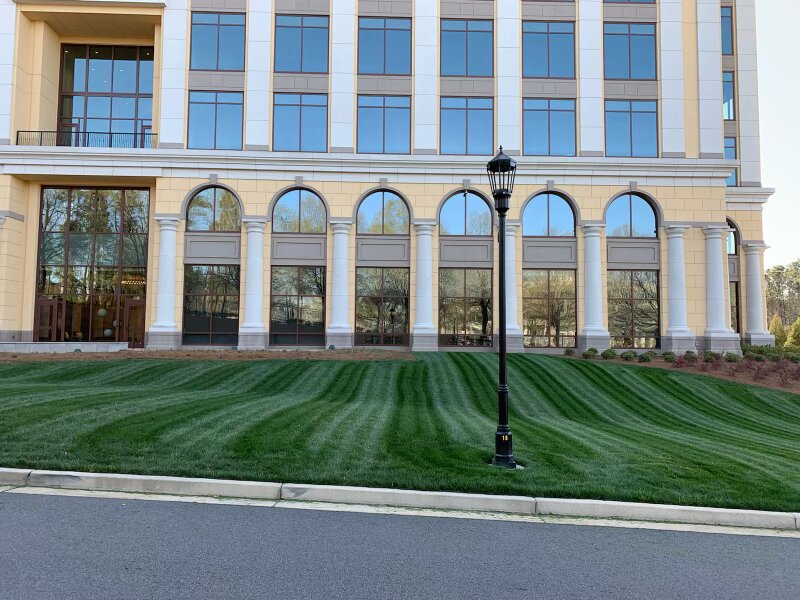
Weeds and uneven turf stand out around entrances, signs, sidewalks, parking areas, and shared outdoor spaces. They can also leave a property manager handling the same lawn complaints week after week.
Simply Green provides commercial weed control and fertilization in Atlanta for offices, retail sites, apartment communities, HOAs, industrial properties, and other managed grounds. The program is based on the grass growing at the property, the season, and the condition of each turf area. Clear communication keeps property managers informed without adding another job to their day.
Care Across the Property
Commercial lawns rarely grow under the same conditions across the whole property. Turf near a building may stay shaded and damp, while grass beside a parking lot takes on reflected heat. Entrances receive more foot traffic. Slopes lose water quickly. Irrigation may cover one section well and miss another. Treating every area the same can leave the original problem in place.
Simply Green looks at the property as a working site, not just a stretch of grass. Weed control and fertilizer are selected for the turf type and time of year, while problem areas are noted for follow-up. Service is coordinated with the property contact so entrances, gates, tenant areas, and busy sections can be handled with less disruption.
Our Six-Step Turf Plan
Service starts with the grass, not a standard application across every green space. We review entrances, signs, street-facing lawns, courtyards, common areas, slopes, parking lot edges, and other maintained turf.
The review helps identify grass types, active weeds, thin sections, poor color, irrigation gaps, and signs of stress. It also shows where site use is affecting the lawn. A worn path between buildings needs a different conversation from weeds appearing in an undisturbed area.
Bermuda, Zoysia, and fescue follow different growing cycles. Bermuda and Zoysia are warm-season grasses that become active as Atlanta temperatures rise. Fescue grows most strongly in cooler weather and often loses density during summer.
The program follows those differences. Fertilizer timing, weed-control products, and seasonal expectations are matched to the grass rather than applied from one general calendar. The turf section handles mixed properties so one grass type is not treated like another.
Commercial service has to fit around the way the site operates. We confirm the gates, restricted sections, irrigation timing, tenant concerns, and any areas requiring special access.
Busy entrances, outdoor seating, pet stations, playgrounds, loading areas, and shared courtyards may require additional planning. The property contact can also flag an event, delivery schedule, maintenance project, or access change that affects the visit.
Weed control, fertilizer, lime, or other scheduled lawn applications are completed according to the grass type and season. Pre-emergent weed control is used before certain weeds germinate. Post-emergent treatment addresses weeds that are already growing.
Coverage includes suitable turf areas identified for service. Conditions on the day of the visit matter. Heavy rain, saturated soil, strong wind, or blocked access can affect whether the work should proceed as planned.
An application cannot correct every turf problem. Irrigation failure, mower damage, vehicle traffic, standing water, compacted soil, insects, and disease can all leave grass thin or discolored.
When one of these issues is visible, it is noted so the property team knows what is affecting the lawn. This keeps a watering problem from being mistaken for a fertilizer problem and helps the manager direct the concern to the right vendor or maintenance team.
The property is reviewed during scheduled visits as weather and turf growth change. Weed activity, color, density, and stressed areas can look different from one part of the season to another.
A section that performs well in spring may struggle once parking lot heat builds in summer. Fescue may thin while Bermuda reaches active growth. Ongoing service allows the program to follow those changes rather than treating the property as though conditions remain fixed all year.
Programs by Grass Type
The right commercial program depends on what is growing across the site. Simply Green provides nine applications per year for Bermuda, Zoysia, and fescue, but the materials and timing are not identical.
Weeds Seen on Atlanta Sites
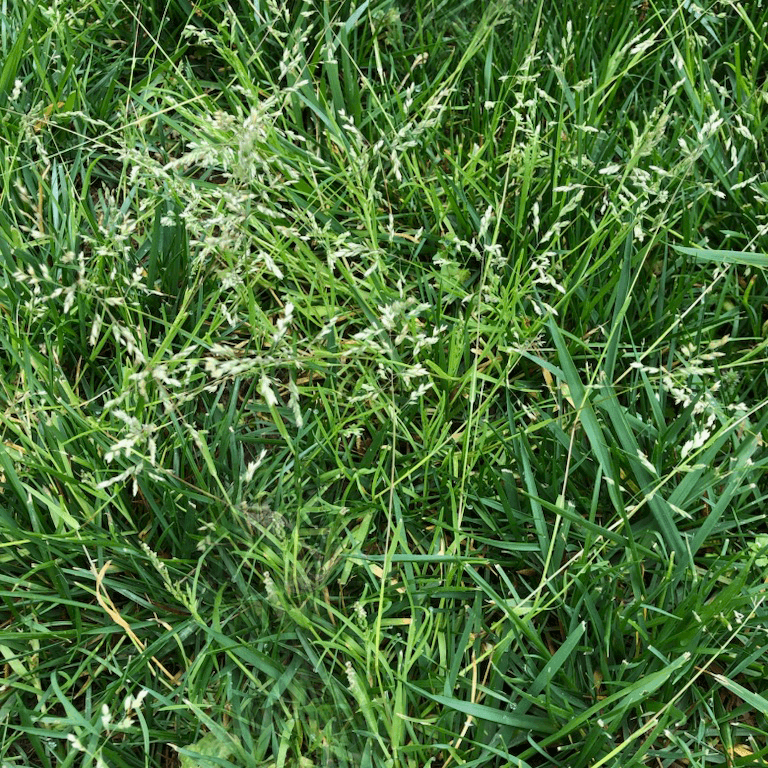
Commercial properties deal with weeds throughout the year. Crabgrass often appears during warm weather, especially near pavement and open soil. Chickweed and henbit are more noticeable during cooler periods. Clover, dandelion, nutsedge, and other broadleaf or grassy weeds may emerge where turf is thin, or conditions favor them.
Weed control is divided into two basic parts:
Healthy turf also plays a role. Grass with suitable nutrition and good coverage leaves less open space for weeds. Fertilizer supports growth, but more fertilizer is not always better. The amount and timing must fit the turf and season.
The University of Georgia Cooperative Extension turfgrass resources provide additional information about Georgia turf, weeds, insects, and lawn diseases.
Turf Around Busy Spaces
The most visible part of a property is not always the easiest place to grow grass. Different sections face different kinds of use and stress.
A commercial lawn program should account for how these areas function. Fertilizer and weed control support the turf, but vehicle damage, repeated traffic, drainage problems, and deep shade need separate attention.
More Than Weed Control
Some turf problems need more than fertilization or weed control. Related services are recommended only when they match an identified need. A thin lawn caused by poor irrigation will not be corrected by adding an unrelated application.
Commercial liquid aeration supports water and air movement through compacted soil without leaving plugs across active areas.
Commercial plant growth regulator manages vertical growth in suitable Bermuda turf through a four-treatment program.
Commercial plant health care provides seven seasonal visits for suitable ornamental trees and shrubs.
Commercial fire ant control treats colonies in suitable lawn and landscape areas.
Commercial mosquito control focuses on likely activity around landscaping, entrances, patios, drains, and shared outdoor areas.
Commercial armyworm and grub control addresses insects that feed on grass blades or damage turf roots.
Reliable Commercial Turf
Commercial turf has to be managed around entrances, tenants, customers, mowing crews, irrigation schedules, and daily property use. Simply Green keeps the lawn program connected to those operating needs while following the grass through the season.
Simply Green understands that a property manager needs reliable work and clear information, not another vendor to chase. Our commercial program supports the turf while keeping site communication practical.
Common Commercial Questions
Your grounds should not require constant follow-up to look maintained. Simply Green provides scheduled commercial weed control and fertilization, keeps the property contact informed, and adjusts care for the grass and season.
Tell us about the property, the turf areas that need service, current lawn concerns, and any access requirements. We will review the site and recommend a commercial program that fits the grounds without treating every section as though it has the same conditions.