Liquid Aeration Services in Atlanta, GA | Simply Green

Atlanta Liquid Aeration

Liquid Aeration Services in Atlanta, GA

Does water run across your lawn instead of soaking into the ground? Simply Green provides residential liquid aeration in Atlanta, GA, for lawns with compacted soil and poor water movement. 

The treatment is sprayed across suitable turf and works below the surface without pulling soil plugs. It can reach narrow side yards, slopes, lawn edges, and other areas where mechanical aeration equipment may be difficult to use.
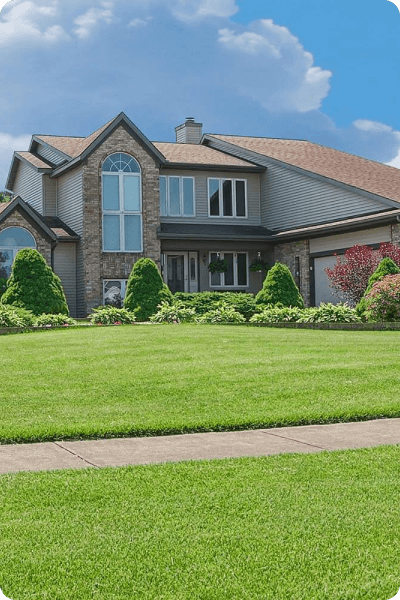

Help Compacted Lawn Soil

Give Your Atlanta Lawn Better Access to Water

Water running toward the sidewalk, puddles remaining after irrigation, or grass thinning near gates and play areas may point to compacted soil. Atlanta’s clay-heavy ground can become tightly packed under foot traffic, pets, mowing equipment, and heavy rain. When that happens, water and air may have a harder time moving toward the roots, even when the lawn receives regular care.

Simply Green applies liquid aeration across suitable turf without pulling plugs from the ground. The sprayed treatment can reach narrow side yards, slopes, curved edges, and spaces near fences or landscape beds. Before recommending it, we check whether compaction is likely to be part of the problem or whether drainage, irrigation, shade, insects, disease, or another lawn condition needs attention.

Your Six-Step Soil Plan

How Our Liquid Aeration Service Works

Start With the Problem Areas

Tell us what you have noticed and where it happens. The lawn may feel hard near a gate, stay wet in a low section, or dry quickly beside a driveway. Grass may also look thinner along a walking route or around a play area.

We look at these sections first, rather than assuming the whole lawn has the same problem. This helps us understand where compaction may be affecting the soil and where another condition could be involved.

Check the Grass and Soil Conditions

The grass type, soil, slope, moisture, sunlight, and lawn use are reviewed before treatment. Bermuda, Zoysia, and fescue grow at different times of the year, so the condition of the grass matters when soil care is planned.

We also look for signs that point away from compaction. Standing water may come from poor grading or a blocked drain. Thin grass beneath a mature tree may need more sunlight than aeration can provide. Brown areas may be linked to drought stress, disease, insects, or mowing.

Get the Lawn Ready for Service

Gates should be unlocked, and toys, hoses, pet items, furniture, and movable equipment should be cleared from the grass. This gives us access to the areas included in the service.

Let us know about new sod, underground irrigation work, recent lawn applications, or damaged turf before treatment. Mowing and watering instructions will be provided if the lawn needs any additional preparation.

Apply Liquid Aeration Across the Turf

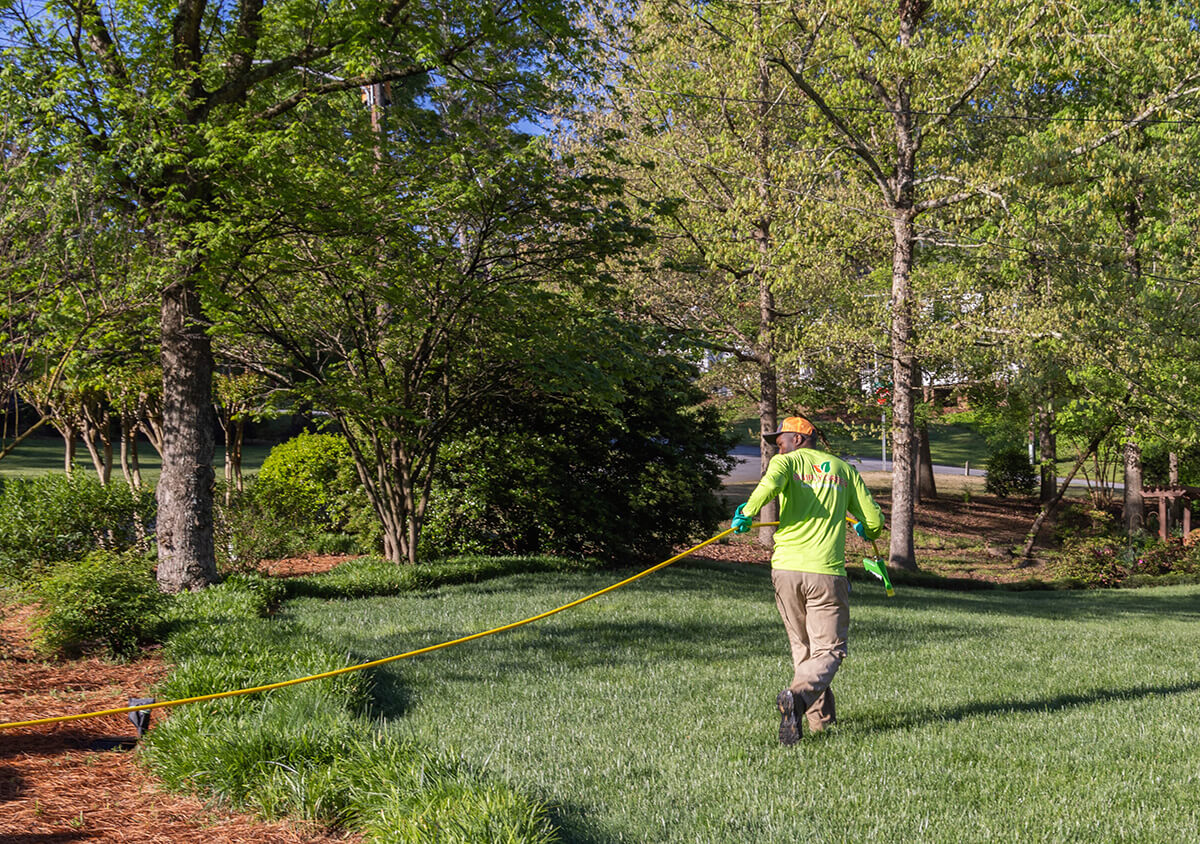
The liquid treatment is sprayed evenly across suitable lawn areas. A sprayed application can reach curves, edges, narrow strips, and turf beside fences or landscape beds. No soil plugs are removed, so the yard is not left covered with cores after service.

Liquid aeration works differently from mechanical core aeration. It does not punch visible holes into the ground. The treatment moves into the soil and supports better movement below the surface over time.

Water According to the Service Instructions

Watering helps move the treatment into the soil, but more water is not always better. Atlanta’s clay-heavy ground may stay wet for a long time after rain, while sunny turf beside pavement can dry much faster.

Follow the watering directions provided after the visit. Avoid letting water run down the driveway, collect in low areas, or keep shaded grass constantly wet. If rain is expected, the instructions may change to account for current soil moisture.

Watch How the Lawn Responds

Pay attention to runoff, puddles, dry areas, soil firmness, and the condition of the grass after service. Liquid aeration works gradually, so the lawn will not change overnight.

Contact us if water continues to collect, the soil still feels extremely hard, or the same area keeps declining. Severe compaction, drainage trouble, irrigation problems, or another lawn condition may need a different solution.

Care After Liquid Aeration

What to Do After Liquid Aeration?

Keep children and pets away from the treated lawn until the application has dried or for the stated re-entry period. Follow the watering directions provided for the visit rather than using a fixed schedule. Recent rain, temperature, soil moisture, and grass type can all affect what the lawn needs.

Try to limit heavy traffic while the ground is wet. Repeated walking, mowing, or equipment use across damp clay can press soil particles together again. Vehicles and heavy lawn equipment should stay off the treated turf.

Continue mowing at a suitable height for the grass. Cutting unusually short will not help the aeration treatment work faster and may place more stress on the lawn. Contact us if you notice unexpected discoloration, thinning, or another change after service.

What Liquid Aeration Does?

Practical Benefits Without Soil Plugs

Liquid aeration can be useful when you want to address compacted soil without physically pulling plugs from the lawn.

Liquid aeration is not a drainage repair. It will not correct a broken irrigation system, deep shade, severe erosion, active disease, insect damage, or a low area created by poor grading.

Reaches tight spaces:

The sprayer can cover narrow side yards, lawn edges, curves, slopes, and areas close to fences or landscaping.

Leaves no soil cores:

You will not have plugs scattered across the yard after treatment.

Supports water movement:

The treatment helps create better conditions for water to move through dense soil instead of staying at the surface.

Supports root access:

Better soil movement can help grass roots reach the air, water, and nutrients already available.

Causes little surface disruption:

The service does not require a heavy core aerator to travel across every part of the lawn.

Works with other lawn care:

Liquid aeration may be used with fertilization, weed control, or core aeration when those services address separate needs.

Atlanta Clay and Traffic

Why Atlanta Lawn Soil Becomes Hard?

Many Atlanta lawns sit on clay-heavy ground. Clay particles are small and can become tightly packed, leaving less open space for water and air. The University of Georgia Extension explains that compacted soil gives grass roots less room to grow and that aeration can help relieve compaction.

Normal use can make the soil harder over time. Some areas receive much more pressure than the rest of the yard:

  • The path between a gate and back door
  • Grass around a play set
  • Routes used by dogs and other pets
  • Lawn edges beside driveways and sidewalks
  • Areas repeatedly crossed by mowing equipment
  • Narrow strips between a home and fence
  • Slopes where water runs over the surface

Atlanta weather can make these differences more noticeable. A heavy downpour may run off firm soil before it has time to soak in. During a dry stretch, shallow-rooted grass may lose color sooner because it cannot reach moisture deeper in the ground.

Water collecting on the lawn does not always mean the soil needs aeration. Grading, drainage, broken irrigation, and buried construction material can create similar problems. We check the area before recommending service.

Liquid Aeration or Core Aeration?

  • When Liquid Aeration Makes Sense

    Liquid aeration is sprayed across the grass and does not remove soil plugs. It can cover lawn edges, slopes, tight corners, and narrow side yards without requiring mechanical equipment to reach every section.

    The change below the surface is gradual. This option may fit lawns that need broad soil support with little disturbance at the surface.

  • When Core Aeration Makes Sense?

    Core aeration uses equipment to remove small plugs from the soil. The openings provide direct paths through compacted ground. The plugs remain on the lawn and break down naturally.

    Core aeration may be recommended when the lawn needs physical openings through the soil. It can also be used before seeding suitable fescue lawns.

  • When Both May Help?

    The two services do not have to compete. One Atlanta lawn may need liquid aeration for broad coverage and core aeration for sections with heavier compaction. We can compare the options based on the soil, grass, property access, and condition of the lawn.

Signs Your Soil Is Tight

When to Ask About Liquid Aeration?

These signs are useful starting points, but they do not prove that compaction is the only problem. We look at the whole area before recommending liquid aeration.

Liquid aeration may be worth discussing if:

The soil feels unusually hard underfoot

Rain runs across the lawn instead of soaking in

Water collects after irrigation

Grass is thin near gates or walking paths

Busy play or pet areas struggle to recover

Turf beside pavement dries faster than nearby grass

Narrow sections cannot be reached easily by large equipment

Watering and fertilization have not improved the grass

Support Compacted Soil

Why Choose Simply Green?

Hard soil can limit how easily water and air reach the lawn’s roots. Simply Green provides liquid aeration without pulling plugs from the ground or running mechanical tines through the yard.

  • The lawn is checked first: We look at runoff, firm soil, thin grass, and recurring dry areas before recommending the service.
  • No soil plugs: The sprayed application does not leave cores scattered across the lawn, driveway, or sidewalks.
  • No mechanical tines: Sprinkler heads, shallow wires, and invisible fence lines are not exposed to punctures from an aeration machine.
  • Coverage around fixed features: Liquid treatment can reach suitable grass beside curbs, fences, landscape beds, and other tight areas.
  • Clear watering directions: You receive practical instructions for moving the application from the grass surface into the soil.
  • Honest advice about other problems: Liquid aeration will not repair irrigation, correct drainage, treat insects, or replace missing grass. We point out when another issue needs attention.

Atlanta’s clay-heavy soil can become firm through mowing, foot traffic, rain, and ordinary lawn use. Simply Green uses liquid aeration when the lawn needs soil support without the surface disruption of core aeration.

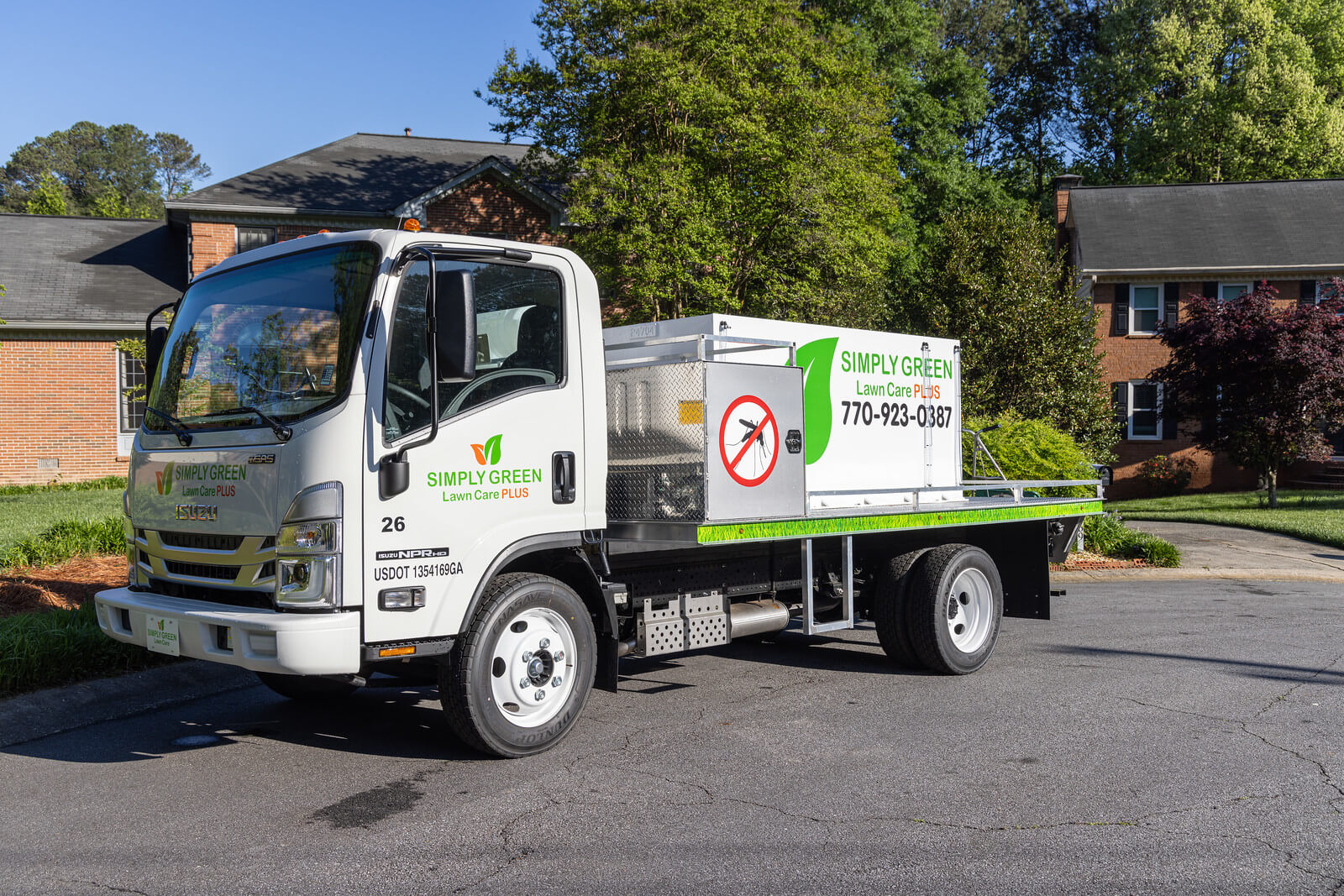
Photo of a Simply Green Lawn Care service truck

Liquid Aeration Questions

Frequently Asked Questions

Request Liquid Aeration for Your Atlanta Home

If water keeps running off the lawn or the ground feels hard underfoot, adding more fertilizer may not solve the problem. The first step is finding out whether compacted soil is getting in the way.

Simply Green can check the grass, soil, water movement, and problem areas. We will explain whether liquid aeration fits the lawn and whether core aeration or another service should also be considered. You will know the recommended service, pricing, preparation, watering, re-entry, and follow-up requirements before scheduling.

Get a free estimate for residential liquid aeration in Atlanta, GA, and take the next step toward better soil movement beneath your lawn.