Residential Fescue Care
Atlanta summers are hard on fescue. Heat, humidity, foot traffic, disease pressure, and dry periods can leave the lawn thin by the end of the season. Bare areas also give weeds more room to grow.
Simply Green provides residential fescue aeration and seeding in Atlanta to renew thin turf during its best growing season. Core aeration removes small soil plugs, easing compaction and improving the soil’s ability to retain water, air, and nutrients. Seeding then places fresh fescue seed across the prepared lawn to improve coverage and replace grass lost during summer.
Renew Thin Fescue Turf
Fescue keeps Atlanta lawns green during cooler weather, but it does not spread laterally to fill in bare spots. Once grass is lost, those spots usually stay thin until new seed is added. Summer heat can leave damage across sunny sections, slopes, high-traffic areas, and grass near driveways or sidewalks. Disease, insects, shade, and irrigation issues can contribute to thinning.
Simply Green combines core aeration with seeding to give new fescue a better place to establish. Aeration opens Atlanta’s clay-heavy soil and improves seed-to-soil contact. Fresh seed is then applied across the lawn to fill weak areas and improve overall density. The work takes place in fall, when cooler air and warm soil support fescue germination and early root growth.
Our Six-Step Lawn Plan
The lawn is checked for thin grass, bare soil, heavy shade, compacted areas, drainage trouble, and summer damage. We also consider how much fescue remains and whether the site gives new seed a reasonable chance to grow.
Seeding will not correct every lawn problem by itself. Deep shade, standing water, active disease, insects, or poor irrigation may continue to affect new grass. Those concerns should be identified before service so expectations remain practical.
Good preparation gives the aerator access to the soil and helps more seed reach the ground. The lawn needs to be mowed to 2 inches or lower before service. Clippings, leaves, sticks, and other debris should be removed from the turf.
The soil also needs enough moisture for the aerator to pull useful plugs. It should feel damp, not saturated. If the ground is dry and hard, watering will be needed before the visit. Follow the instructions provided for your lawn's weather and condition rather than using the same amount for every property.
Sprinkler heads, valve boxes, drainage pipes, invisible dog fences, shallow wires, and other objects in or just below the lawn must be marked before aeration. Visible flags placed directly above each object help the aerator avoid it.
Simply Green also recommends contacting Georgia 811 early enough to have underground utility and communication lines marked. Private sprinkler components, invisible fences, and other homeowner-installed items are not always included in a standard utility locate, so those still need to be identified separately.
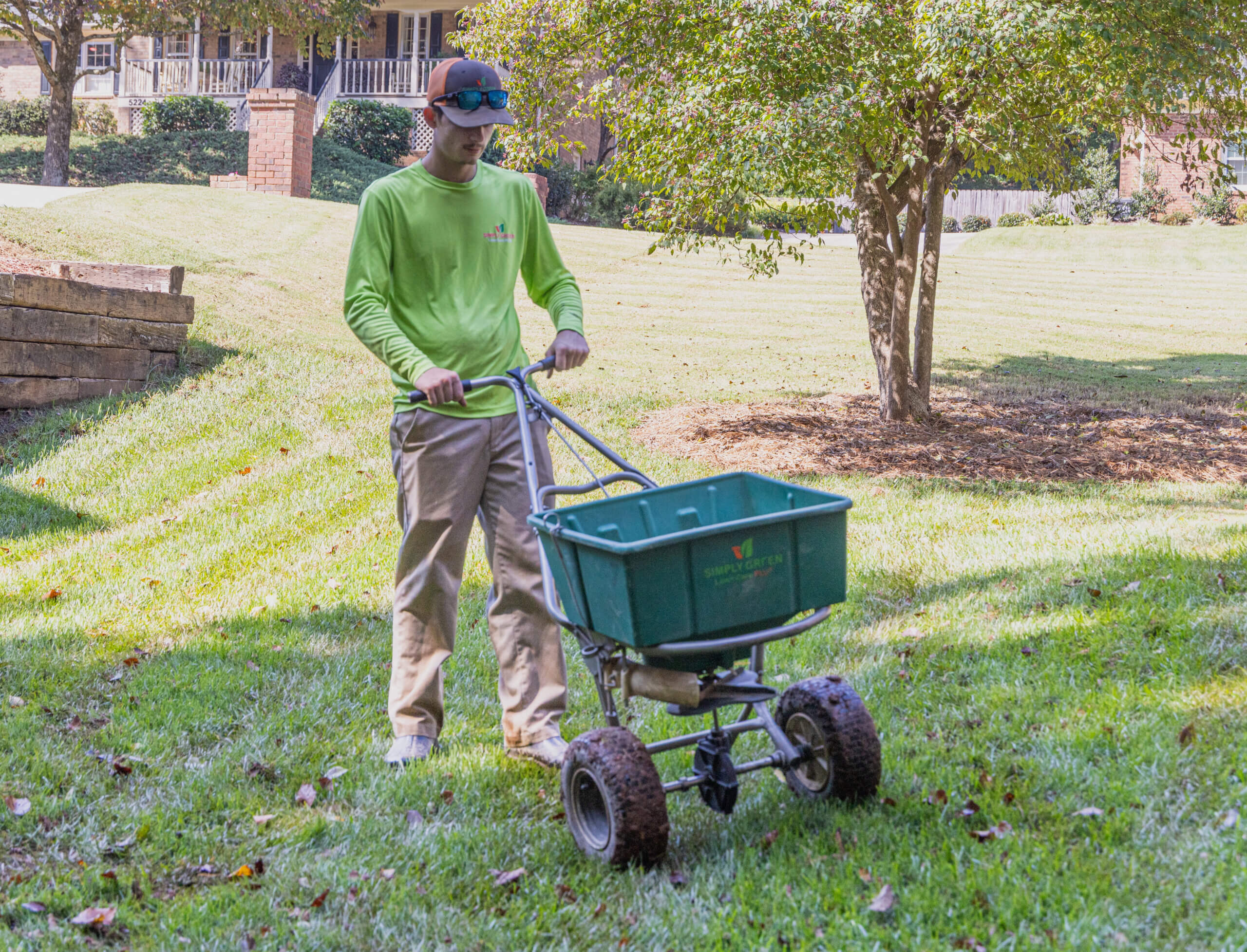
A core aerator travels across accessible fescue areas, removing small soil plugs. These openings reduce surface compaction and create paths into the root zone.
The plugs are left on the lawn. They break apart naturally as they dry, are exposed to water, and are crossed by regular foot or mowing traffic. Removing them would take soil and organic matter away from the turf and reduce some of the benefits of aeration.
Fescue seed is spread over the aerated lawn after the soil has been opened. Some seed settles into the aeration holes, while other seed reaches the soil between existing grass plants.
This contact with the ground matters. Seed left on tall grass, leaves, or a thick layer of debris has a harder time staying moist and developing roots. That is why close mowing and cleanup before service are part of the process.
Once seeding is complete, the lawn needs steady moisture. Simply Green provides watering and mowing instructions for the weeks ahead.
The work does not end when the seed is spread. Germination and establishment depend heavily on what happens afterward. Weather, irrigation coverage, soil moisture, seed movement, traffic, and mowing all affect how evenly the new fescue develops.
Why Fall Timing Matters?
all fescue is a cool-season grass. Its strongest growth occurs when air temperatures are milder, making fall the practical time to aerate and seed in Metro Atlanta.
Simply Green generally schedules this service from September through mid-October. During that period, the soil is still warm enough for germination, while cooler weather reduces some of the stress that new seedlings would face in summer. Fall establishment also gives the grass time to develop before the next Atlanta summer.
Spring seeding is less dependable. New fescue has less time to build roots before heat arrives, and spring weed-control timing can conflict with seed germination. The exact condition of the lawn still matters, but waiting for the proper fall window usually gives the seed a more useful growing period.
The University of Georgia turfgrass resources provide grass-specific guidance for Georgia lawns, including seasonal care for tall fescue. Local timing remains important because conditions in North Georgia differ from warmer areas farther south.
Open Soil, Add New Grass
Seeding adds new grass plants. Core aeration prepares the soil so more of that seed has contact with the ground. Completing both services simultaneously addresses two common problems in an established fescue lawn.
Foot traffic, mowing, rain, and normal use press soil particles closer together over time. Atlanta’s clay-heavy ground can become especially firm when it dries. Water may run across the surface, leaving less open space for roots to grow.
Core aeration removes plugs rather than simply pressing holes into the soil. The openings improve movement of water and air into the ground. They also create places where seed can settle below the surface.
Fescue grows in bunches. It does not spread through runners like Bermuda or Zoysia. A thin section will not always fill on its own, even if the remaining grass receives fertilizer and water.
Adding seed places new plants between the existing clumps. As those seedlings mature, they improve coverage and reduce open soil. A denser lawn can also leave less unused space for weeds, although seeding is not a substitute for ongoing weed control and fertilization.
Signs It Is Time to Seed
Many Atlanta fescue lawns need some level of fall seeding after summer. The amount depends on sun, traffic, irrigation, disease pressure, and the condition of the existing turf.
Seeding cannot overcome every site limitation. Areas beneath dense tree cover may not receive enough light. Constantly wet ground may need drainage attention. Active lawn disease or insect damage should be handled before relying on new seed.
Open space remains between fescue plants once cooler weather approaches.
Grass has been lost to heat, traffic, disease, insects, or another earlier problem.
A screwdriver is difficult to push into damp soil, or water runs away before soaking in.
Seed may not have reached the soil, stayed moist, or received enough suitable light.
Regular activity near gates, play areas, walkways, and outdoor living spaces can thin the grass and compact the soil.
Annual summer stress can gradually reduce lawn density when lost grass is not replaced.
Renew Your Fescue Lawn
Fescue needs more than seed scattered over thin grass. The ground must be prepared, the service must happen during the right season, and the seed needs steady care afterward. Simply Green keeps each part of that process clear.
Simply Green works with fescue through Atlanta’s summer decline and fall recovery period. The service opens the soil, adds new grass plants, and gives you a clear plan for the weeks that follow.
Service is generally completed from September through mid-October, while the soil remains warm and the air is becoming cooler.
Small soil plugs are removed to ease compaction and improve seed-to-soil contact.
Fresh fescue seed is applied across the prepared lawn, including suitable thin and bare areas.
You will know how short to mow, what debris to remove, how moist the soil should be, and which shallow objects must be marked.
Aftercare covers the early germination period and the following weeks while roots and blades develop.
Shade, drainage, traffic, irrigation, disease, and weather can affect how evenly seed grows. We explain concerns that could limit establishment.
Complete Fescue Support
Aeration and seeding rebuild lawn density, but the new grass still needs year-round care.
Each service has a separate purpose. The right combination depends on the fescue, soil, sunlight, and problems found on the property.
Common Fescue Questions
Thin fescue will not fill bare areas on its own. Fall aeration and seeding open compacted soil, introduce new grass plants, and give the lawn time to establish before another Atlanta summer.
Simply Green will review the lawn, explain how to prepare, complete the aeration and seeding, and provide clear watering and mowing instructions for the weeks that follow. Scheduling early also helps secure service during Atlanta’s limited fall seeding window.