Plant Health Care in Atlanta, GA | Simply Green

Atlanta Plant Health Care

Plant Health Care Services in Atlanta, GA

Are shrubs losing color, leaves developing spots, or insects appearing throughout your landscape? Simply Green’s residential plant health care services in Atlanta, GA, offers seven seasonal applications. 

The program combines plant inspections, targeted pest and disease care, horticultural oil, root-zone fertilization, and practical recommendations for your property. Treatment changes throughout the year because the needs of Atlanta trees and shrubs change with the weather, plant growth, and pest activity.

Care Beyond the Lawn

Protect the Trees and Shrubs Around Your Atlanta Home

Changes in your landscape plants can appear slowly or seem to happen within a few days. Leaves may turn yellow, develop spots, curl, drop early, or show chewed edges. Sticky residue, webbing, weak flowering, or insects beneath the leaves can provide other signs. These symptoms may come from pests or disease, but water, drainage, roots, soil, sunlight, and recent weather can produce similar changes.

Simply Green provides seven seasonal plant health care visits for suitable ornamental trees and shrubs. The program combines inspections, targeted pest and disease care, root-zone fertilization, horticultural oil, and practical recommendations for your property. Each visit follows the plants and current Atlanta conditions instead of using the same treatment across every part of the landscape.

Your Six-Step Plant Plan

Our Residential Plant Health Care Process

Landscape Plant Inspection

Service starts with the plants causing concern. Trees, shrubs, hedges, and other ornamental plants are checked for discoloration, leaf damage, webbing, sticky residue, insects, disease symptoms, weak growth, and moisture stress.

The surrounding conditions matter too. Sunlight, drainage, irrigation, nearby pavement, mulch depth, crowded growth, and Atlanta’s clay-heavy soil can all affect how a plant looks and responds.

Plant and Problem Identification

The plant must be identified before treatment is selected. An azalea, boxwood, holly, hydrangea, camellia, crape myrtle, or ornamental tree may have different needs and common problems.

Visible insects, disease symptoms, and environmental stress are also reviewed. Similar symptoms can have different causes, so treatment is not recommended from leaf color alone. If a concern falls outside the plant health care program, we will explain what kind of help may be more appropriate.

Root-Zone Fertilization

Root-zone fertilization is included during the seasonal program. The root zone is the area of soil where active roots take in water and nutrients. A liquid treatment is applied around suitable ornamental plants so it can reach this important part of the landscape.

Our program uses a slow-release fertilizer with micronutrients and a wetting agent. Micronutrients are nutrients plants need in smaller amounts, while a wetting agent helps water move through the treated soil. The application is completed according to the plants, season, and property conditions.

Early Season Protection

Early spring service helps prepare suitable plants for the period when new foliage and pest activity begin to increase. Fungicide and pest prevention products may be applied where appropriate.

A fungicide is a product used to manage certain fungal diseases. It cannot correct every spot, wilted leaf, or declining branch. Plant identification, symptoms, weather, and site conditions must support the treatment decision.

Seasonal Plant Monitoring

Three integrated pest management visits are completed from mid spring through late summer. Integrated Pest Management, or IPM, means checking the plants and using the most suitable combination of monitoring, plant care, and targeted treatment.

Plants are inspected for active insects and disease before treatment decisions are made. Recommendations may also address watering, pruning, airflow, mulch, or another property condition contributing to the problem.

Fall Recovery and Dormant Care

Early fall service includes biostimulants to support plants recovering from Atlanta’s summer heat and moving toward winter dormancy. A biostimulant is a product used to support normal plant processes rather than acting as a basic fertilizer.

From late fall into early winter, horticultural oil is applied to suitable dormant plants. The oil helps manage certain overwintering insects, mites, and eggs. These seasonal steps complete the seven-application program.

Care After Plant Service

What to Do After a Plant Health Care Visit?

Keep people and pets away from treated areas until applications have dried or for the stated re-entry period. Follow the instructions provided after each visit because watering, pruning, and access may depend on the treatment completed that day.

Do not automatically add extra water. According to the University of Georgia Extension, overwatering and underwatering can produce similar symptoms, including yellowing and wilting. Check the soil and follow guidance suited to the plant, weather, and drainage.

Avoid pruning treated growth immediately unless the service instructions say otherwise. Contact us if leaves develop an unexpected reaction, symptoms spread quickly, or the plant changes between visits.

What Does The Seven-Visit Program Include?

  • Integrated Pest Management

    IPM starts with observation. Plants are checked for insects, disease symptoms, and stress before treatment is selected. This keeps applications focused on plants that need attention instead of treating every shrub as though it has the same problem.

  • Horticultural Oil

    Horticultural oil is used during the dormant season on suitable plants. It works by coating certain overwintering insects, mites, and eggs. Timing and complete coverage are important, and not every plant or condition is suitable for the same application.

  • Root-Zone Fertilization

    Root-zone treatment places nutrients around the soil area used by ornamental plant roots. It may support leaf and flower development, while soil amendments in the application help with nutrient movement and soil structure.

    These three parts work together across the year. None should be viewed as a universal cure for incorrect planting depth, severe drainage trouble, physical damage, or a plant growing in the wrong location.

Why Local Conditions Affect Landscape Plants?

Atlanta landscapes often combine red clay, mature trees, heavy summer rain, sudden dry periods, hot pavement, and shaded foundation beds. One side of a home may remain damp while plants near a driveway or south-facing wall dry much faster.

Clay soil can hold moisture for a long time but may also become compacted. Roots need both water and air, so soil that remains saturated can be just as concerning as soil that dries out. Established tree roots may also compete with smaller shrubs for moisture and nutrients.

Neighborhood conditions vary as well. Properties in Buckhead, Morningside, Virginia-Highland, Grant Park, and other established areas may contain mature plantings with crowded branches or older irrigation. Newer landscapes can have compacted construction soil, limited root space, or plants placed too close to pavement.

A local plant health care plan considers these differences. Treatment can address suitable insects, diseases, nutrition, and seasonal stress, but drainage, sunlight, irrigation, and plant placement still matter.

Watch for Plant Changes

Signs Your Trees and Shrubs Need Attention

A symptom does not confirm its cause. Tell us which plants are affected, when the change began, and whether watering, pruning, construction, or landscape work has recently changed.

Plant health care may be worth discussing when you notice:

Yellow, pale, spotted, curled, or wilting leaves

Holes or chewed edges on foliage

Sticky residue on leaves, pavement, or outdoor furniture

Webbing, scale-like bumps, or visible insects

Early leaf drop or thin foliage

Weak flowering or slower-than-expected growth

Branches declining in one part of the plant

Repeated problems during the same season

Care Beyond Your Lawn

Why Choose Simply Green?

A yellow leaf or thinning shrub does not identify the cause by itself. Insects, disease, roots, drainage, soil, sunlight, and weather can produce similar changes. Simply Green checks the plant and its surroundings before deciding what care is appropriate.

  • Seven visits through the year: The program follows ornamental trees and shrubs from late winter through the next dormant season.
  • Treatment based on what is found: Plant checks guide pest and disease care instead of applying the same treatment to every plant.
  • Root-zone nutrition: Suitable trees and shrubs receive seasonal fertilization around the area where their roots can use it.
  • Care during Atlanta’s growing season: Three visits from mid spring through late summer focus on current insect, disease, and plant-stress concerns.
  • Support after summer: Early Fall biostimulants help suitable plants manage seasonal stress and prepare for cooler weather.
  • Dormant-season care: Horticultural oil is used on suitable plants to address certain insects, mites, and eggs that remain on plant surfaces.

Simply Green considers the plant, location, and season together. If irrigation, drainage, pruning, or root damage is contributing to the problem, we explain it instead of presenting treatment as the answer to everything.

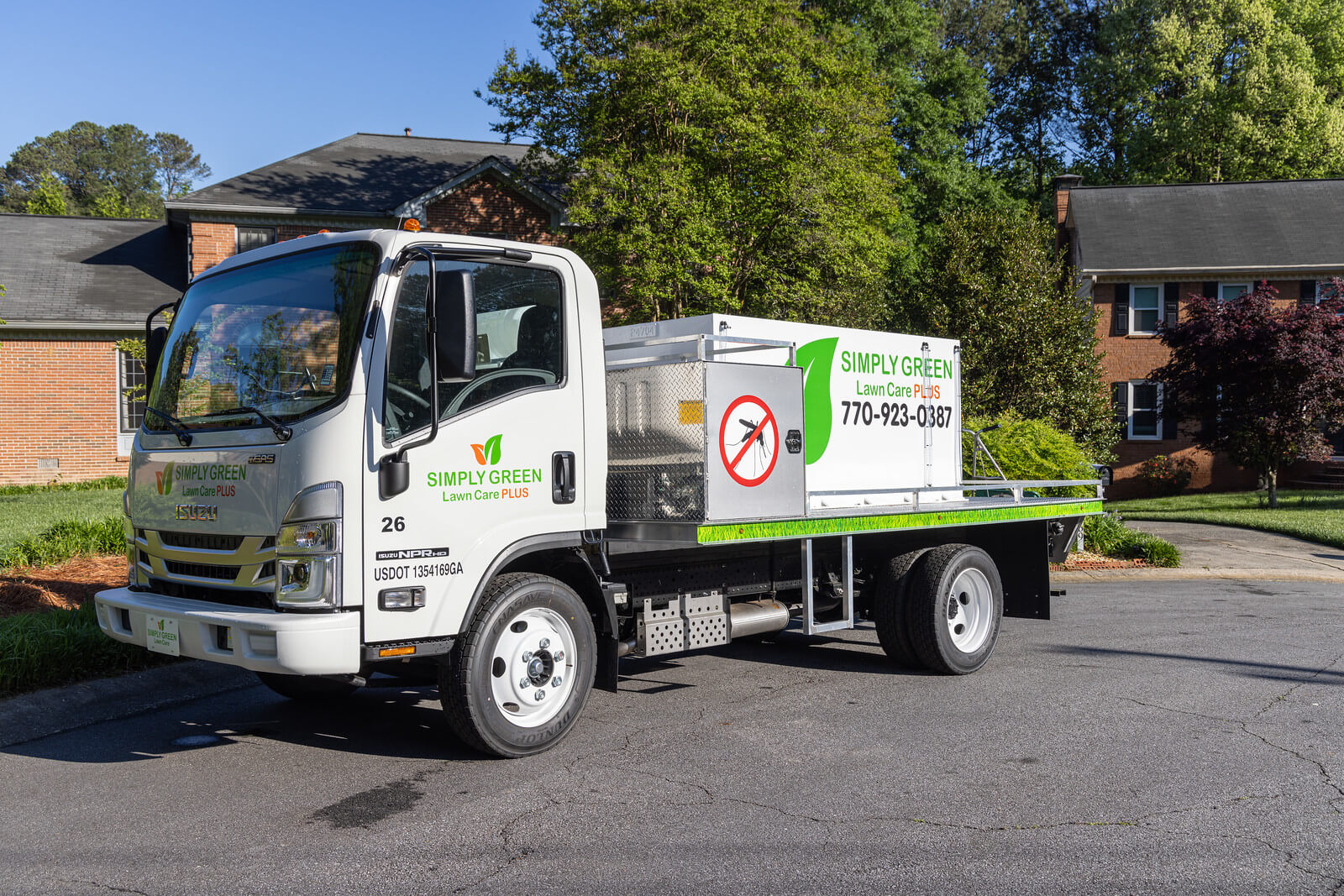
Photo of a Simply Green Lawn Care service truck

Atlanta Plant Questions

Frequently Asked Questions

Request Plant Health Care for Your Atlanta Home

You should not have to guess whether spotted leaves, sticky residue, weak growth, or early leaf drop comes from insects, disease, water, or another problem. We can inspect your ornamental trees and shrubs, explain what we find, and determine whether our seven-visit program fits your landscape.

The recommended service and pricing will be explained before scheduling. You will also receive clear information about treatment, re-entry, watering, and what to watch for between visits.

Get a free estimate for residential plant health care in Atlanta, GA, and give your landscape practical support through every season.