
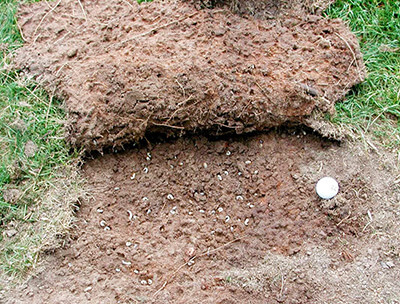
Have you noticed your lawn looking drab with odd-shaped patches of brown, dead grass? Georgia homeowners could mistake this problem for some kind of fungus when the culprit is actually an infestation of Grub Worms. To be certain you are dealing with Grub Worms takes careful investigation. Take a shovel, or an edger, and cut one square foot of turf near where the grass looks brown and dead. Lift up the grass and count how many grubs you see underneath. If there are 10 or more present, take action quickly. If you are not sure or want to confirm what you are seeing, keep reading to learn more about this pest and how it can be controlled.
What are Grub Worms?
Grub Worms are the larvae of beetles–mainly Japanese Beetles, June Beetles (aka May Beetles), and Southern Masked Chafers, which are native to the Southeastern United States. Beetles lay their eggs in the soil, and once they hatch, the larva feed on the roots of turfgrasses. The bigger they get, the more they eat. This is when damage to lawns becomes evident as brown patches appear.

What do Grub Worms look like?
Grub worms are usually white or cream-colored with a distinct C-shape. They have three pairs of legs near their head, which is a golden-brown color, and their bodies are slightly curved. Grub worms can grow up to 1.5 inches long. Their bodies look a little slimy and shiny
What causes Grub Worms?
Beetles like to lay their eggs in wet soil, so places like athletic fields, golf courses and high-maintenance lawns attract these insects. While soil is the main attraction, Grub Worms also thrive in lawns that are stressed and weak, probably due to improper mowing techniques, over-fertilization, or soil compaction.
How do Grub Worms spread?
Most grub worms found in Georgia have a one-year life cycle, from egg to adult. During that year, they can cause a whole lot of damage to a once healthy lawn. Grub Worms can spread from one lawn to another through various means, including adult beetles flying to different areas and laying eggs. They can also hitch a ride on gardening equipment, lawn furniture, or other items that are moved from one area to another.
How to prevent Grub Worms?
Prevention is key when it comes to Grub Worms. Maintaining a healthy lawn with grasses that grow deep roots is the best way to prevent Grub Worms from infesting your lawn.
Here are some tips for preventing Grub Worms:
- Water your lawn deeply but infrequently.
- Aerate your lawn to prevent soil compaction.
- Mow your lawn at the proper height to avoid stressing the grass.
- Avoid over-fertilizing your lawn.
- Use a preventative insecticide in the spring or early summer to kill Grub Worms before they can cause significant damage, which is not revealed until late summer/early fall.
How to treat Grub Worms?
If your lawn is already infested with Grub Worms, there are several treatment options available. When conditions are dry, grub worms bury themselves deeper into the soil, so when attempting to draw them out, it’s best to water the lawn a couple of days before treatment.
Here are some of the most effective treatments:
- Apply a curative insecticide to kill the Grub Worms.
- Use beneficial nematodes to naturally control Grub Worms. (This method works well if only a few grubs are present per square foot.)
- Employ biological control by introducing predatory insects, such as birds or parasitic wasps, that feed on Grub Worms.
Healing a Grub Worm Infestation.
After your lawn has been successfully treated by Simply Green Lawn Care experts, replace damaged grass with new sod or seed to repair the affected areas of your lawn.
Grub Worms can be a significant problem for Georgia homeowners, but by following the tips outlined in this guide, you can prevent and treat Grub Worm infestations effectively. Remember to maintain a healthy lawn, use preventative insecticides, and take action at the first sign of a Grub Worm infestation to halt the damage and start the healing.
Image credit: https://www.canr.msu.edu/news/how_to_choose_and_when_to_apply_grub_control_products_for_your_lawn