Georgia Lawn Fertilization Guide
Both liquid and granular fertilizers can support a healthy lawn. The better choice depends on the nutrient source, grass type, season, application method, and condition of the turf.
Start With the Lawn's Needs
Liquid fertilizer is not automatically better for quick results, and granular fertilizer is not always a slow- release product. Either form may contain fast- release or controlled- release nutrients depending on how it is formulated.
The physical form mainly affects how the product is mixed, distributed, watered, and absorbed. What matters most is whether the fertilizer supplies the right nutrients at the correct rate and time for the grass.
Before choosing a fertilizer, consider:
Applying the wrong product, or the right product at the wrong time, can waste nutrients, injure turf, or increase disease pressure.

Uniform Spray Applications
Liquid fertilizer is dissolved or suspended in water and applied with spray equipment. Nutrients may be absorbed through the grass blades, soil, or both, depending on the product and application method.
Liquid fertilizer is useful when the formulation, timing, and application method match the lawn’s needs. It should not be selected simply because it is expected to produce instant color.
Measured Nutrients in Solid Form
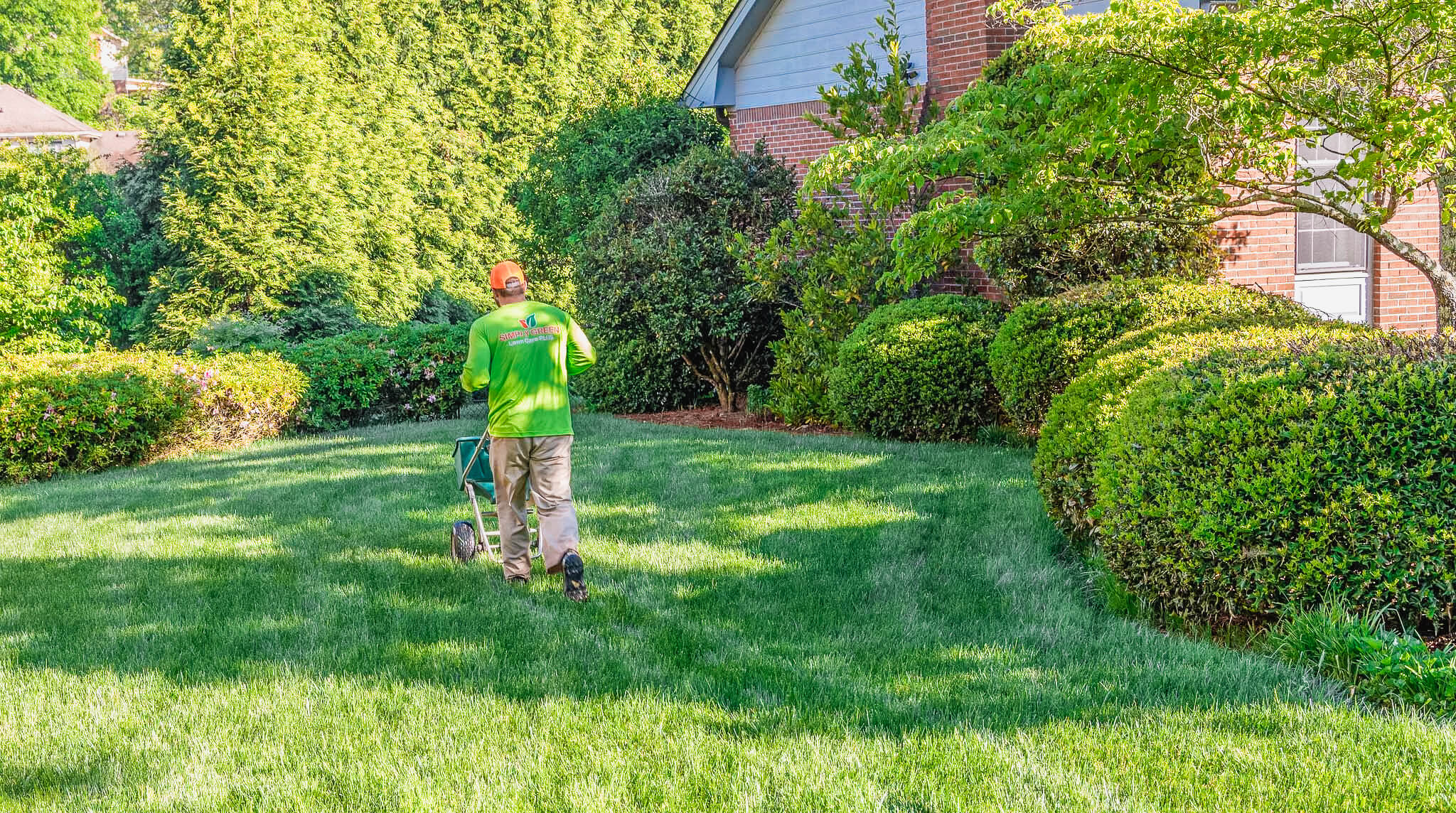
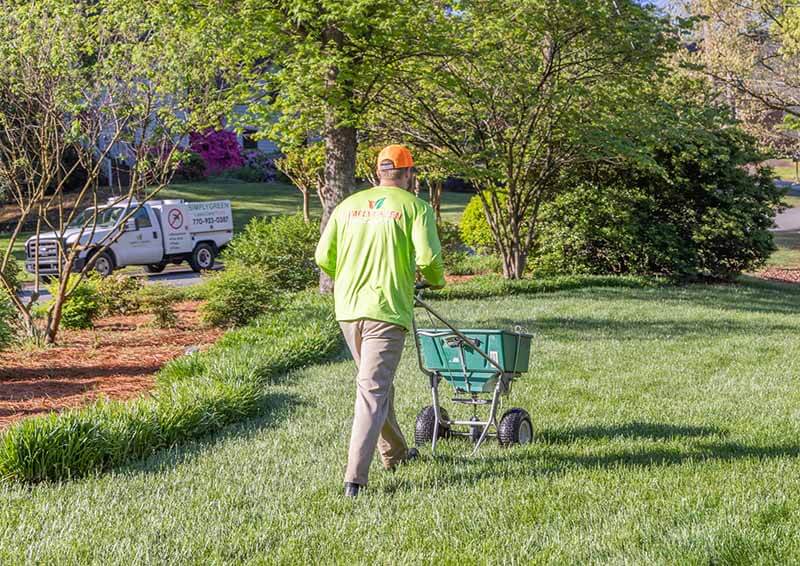
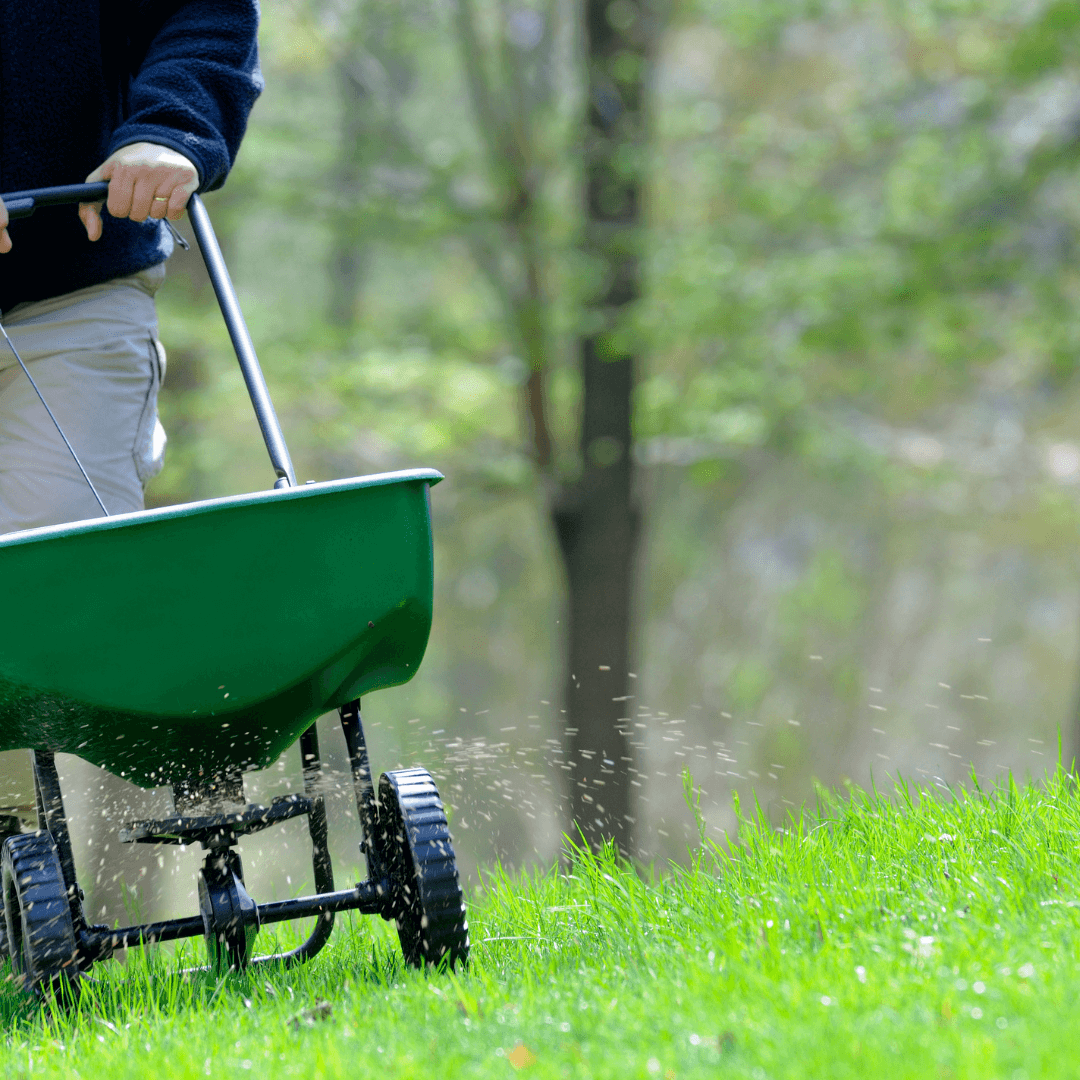
Granular fertilizer consists of dry particles distributed across the lawn with a broadcast or drop spreader. The granules dissolve after irrigation or rainfall and release nutrients into the soil.
Not every granular fertilizer is slow-release. The fertilizer label identifies the nutrient sources and how much nitrogen is immediately available or released over time.
| Factor | Liquid fertilizer | Granular fertilizer |
| Application | Applied with calibrated spray equipment | Applied with a calibrated spreader |
| Coverage | Even when mixed and sprayed correctly | Even when passes are properly spaced |
| Nutrient release | Can be quick- or controlled-release | Can be quick- or slow-release |
| Watering | Depends on the product label | Often watered in to dissolve granules |
| Convenience | Requires accurate mixing and spraying | Requires correct spreader settings |
| Frequency | Depends on formulation and lawn needs | Depends on formulation and release rate |
| Cost | Varies by product, rate, and equipment | Varies by product, coverage, and frequency |
| Main risks | Drift, incorrect mixing, and overlap | Spills, overlap, and uneven spreading |
| Best choice | Based on the lawn, season, and treatment goal | Based on the lawn, season, and treatment goal |
Neither option is automatically faster, cheaper, or better for lawn health. The right choice depends on the fertilizer formulation, grass type, soil conditions, season, and application plan.
Fertilize During Active Growth
Fertilizer timing should follow the grass’s growth cycle.
These warm-season grasses grow actively from late spring through summer. Fertilization should generally begin after the lawn has greened up and entered active growth, not while the turf is still dormant.
Late or excessive nitrogen can interfere with winter preparation and increase the risk of certain lawn diseases.
Fescue is a cool-season grass that grows most actively from fall through spring. Its primary fertilization period differs from Bermuda and Zoysia. Heavy nitrogen applications during Metro Atlanta’s summer heat can place additional stress on Fescue and contribute to disease pressure.
The calendar alone should not determine an application. Weather, soil temperature, turf condition, and the current lawn program also matter.
Know What You Are Applying
Fertilizer labels display three numbers representing the percentage by weight of:
A 16-4-8 fertilizer contains 16% nitrogen, 4% phosphate, and 8% potash by weight.
The label also provides:
More fertilizer does not produce proportionally better results. Exceeding the labeled rate can burn turf, increase disease pressure, and allow nutrients to move away from the target area.
Fertilize With Better Information
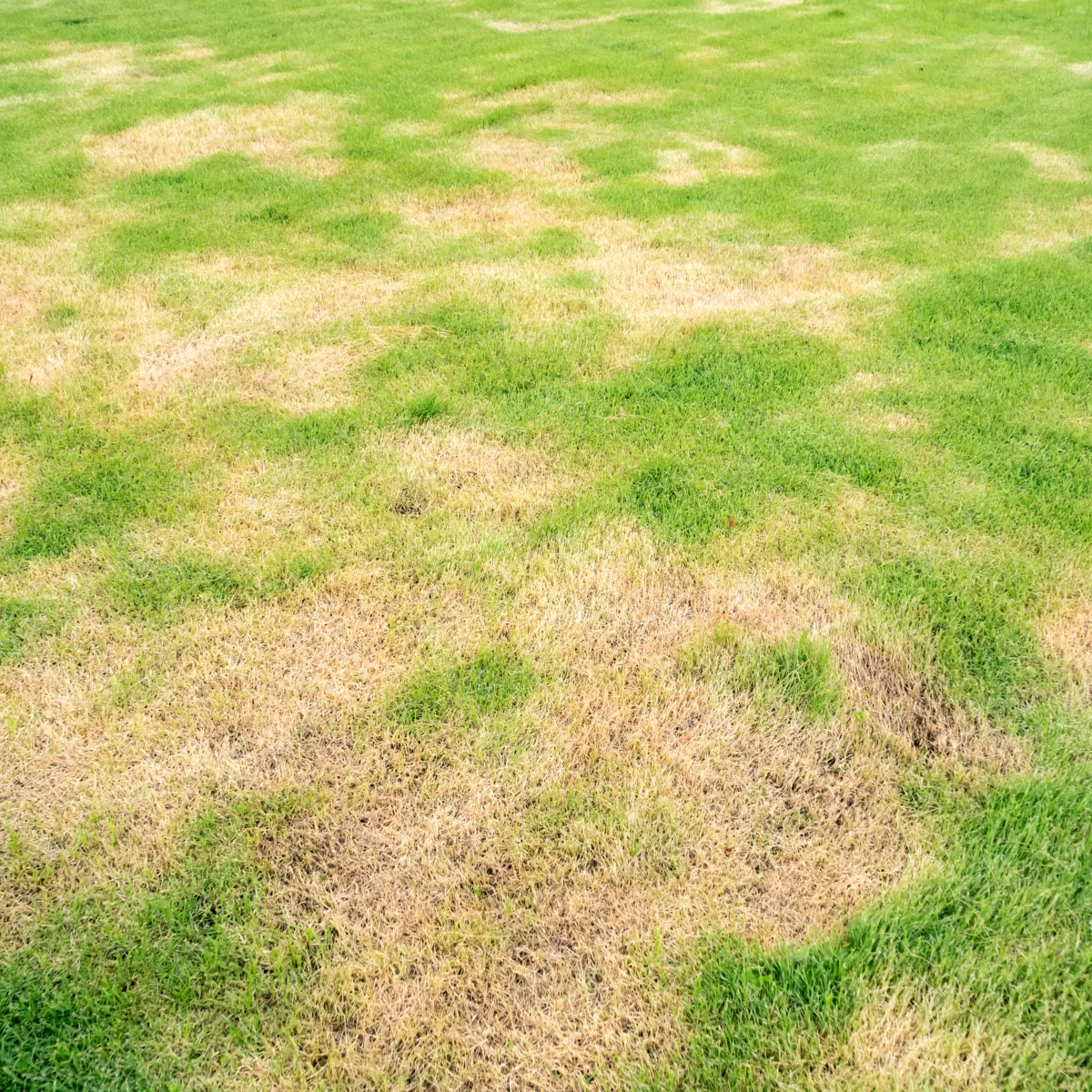
Color alone does not reveal what a lawn needs. Yellowing or thin turf may result from compacted soil, poor irrigation, shade, disease, insects, incorrect mowing, or unsuitable pH.
A soil test can provide information about:
Soil tests do not typically provide a permanent nitrogen reading because nitrogen levels change quickly. Nitrogen recommendations are usually based on the grass type, season, and management program.
Apply lime only when soil- test results indicate it is needed. Lime is not fertilizer and will not correct every lawn problem.
Protect the Lawn and Landscape
If fertilizer lands on a hard surface, sweep or blow it back onto the lawn. Do not wash it into a street or storm drain.
Programs for Different Property Needs
Simply Green uses liquid and granular fertilizer as appropriate for the grass, season, and program. Fertilization is paired with weed control and property-specific observations rather than treated as an isolated application.
Homeowners can explore recurring weed control and fertilization, liquid aeration, moisture management, Fescue aeration and seeding, and other services for Metro Atlanta lawns.
Explore Residential Lawn Care Services
Learn More About Residential Weed Control and Fertilization
Commercial programs support managed turf at offices, multifamily communities, HOA properties, retail locations, common areas, and other commercial landscapes.
Explore Commercial Lawn Care Services
Learn More About Commercial Weed Control and Fertilization
You do not need to choose between liquid and granular fertilizer before contacting Simply Green. Tell us about the grass type, current condition, weeds, color, irrigation, and any recent lawn treatments.
We can evaluate the property and recommend a residential or commercial program based on the lawn’s needs and the time of year.