
Smarter Commercial Watering
Simply Green applies Hydretain to commercial lawns and landscape plants to keep more moisture available around the roots, especially in areas that dry out quickly during Atlanta heat.
Your Hydretain Service
Every property has different irrigation patterns, sun exposure, soil conditions, and plant material. Those conditions are considered before Hydretain is applied.
The property is checked for recurring dry spots, fading turf, wilting plants, weak growth, and other signs of moisture stress. Lawns, trees, shrubs, ornamental plants, new sod, and recently seeded areas can all be included in the assessment.
Irrigation coverage, full-sun areas, reflected heat, slopes, and soil conditions are reviewed to understand why certain areas may be drying faster. Broken sprinkler heads, leaks, or poor coverage may need to be corrected separately.
Some areas deserve closer attention because of where they are or how quickly they dry out. Entrances, monument signs, common areas, new landscaping, exposed turf, and recurring dry spots can be identified before treatment.
Hydretain is planned around the actual landscape rather than treating every part of the property as though it has the same moisture needs. Plant material, irrigation patterns, soil conditions, and existing moisture stress all factor into the treatment.
Hydretain is applied to suitable lawn and landscape areas and then watered into the soil. Once in the root zone, it attracts small amounts of moisture and keeps it available for plants to use.
The property contact receives clear watering instructions after treatment, along with any guidance to share with the landscape or irrigation team. New sod, planting, irrigation repairs, or construction should also be reported when those changes affect watering conditions.
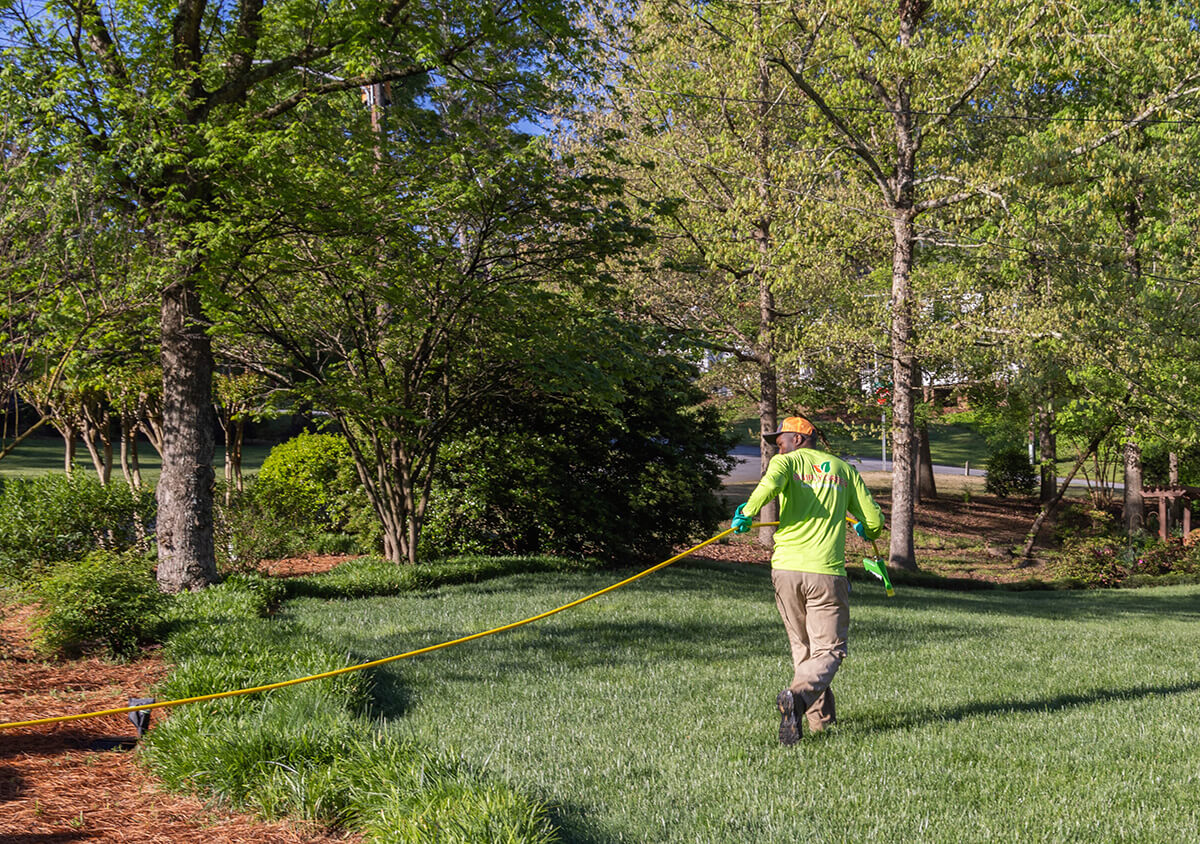
Hydretain needs water to move into the root zone. Following the watering instructions after application gives the treatment the conditions it needs to work properly.
Follow the watering schedule provided after treatment. The instructions can be shared with onsite maintenance teams, landscapers, or irrigation contractors.
Hydretain does not replace irrigation. Broken heads, leaks, clogged nozzles, and areas with poor sprinkler coverage still need to be corrected.
New sod, seeded areas, recent plantings, irrigation repairs, and construction can change how much water different parts of the landscape need. Let Simply Green know when those changes affect treated areas.
Watch areas that regularly fade or dry faster than the surrounding landscape.
If the same problem continues, irrigation, drainage, compacted soil, or another site condition may also need attention.
A Practical Commercial Moisture Plan
Hydretain is most useful when a commercial property first identifies why certain areas dry faster, treats the locations where moisture support is actually needed, and coordinates watering changes with the teams responsible for the landscape.
The property is reviewed for irrigation coverage, full sun, reflected heat, slopes, soil conditions, and recurring moisture stress before treatment is planned. Broken sprinkler heads, leaks, drainage problems, or other site issues may need separate correction.
Hydretain does not have to be applied across the entire property. Suitable turf, landscape beds, new sod, seed, shrubs, and other plantings can be included where keeping usable moisture around the roots is difficult.
Hydretain works with rainfall and irrigation already reaching the soil. The property contact receives watering instructions and should report irrigation repairs, new landscaping, construction, or other changes that alter moisture needs.
Know Whether Hydretain Fits
Hydretain cannot correct a broken head, leak, clogged nozzle, or irrigation zone that does not reach the problem area. Water-delivery issues should be identified before assuming the landscape needs moisture-management treatment.
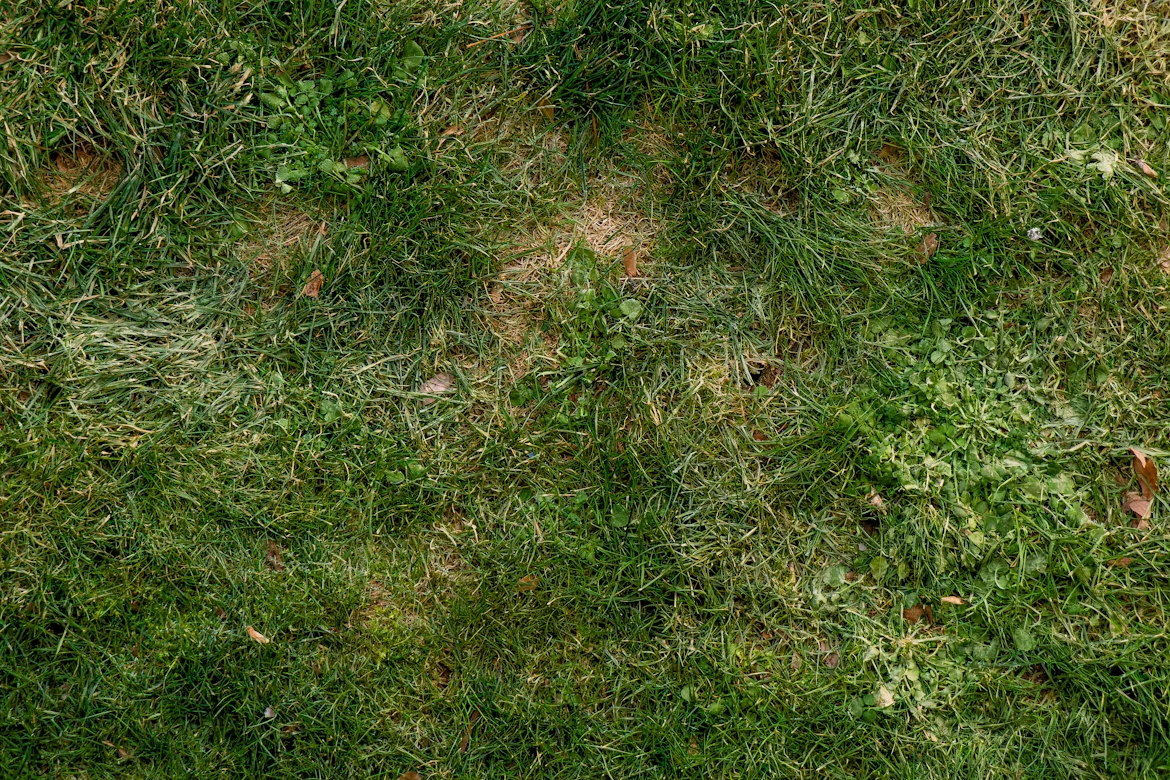
Recurring dry spots near pavement, on slopes, in full sun, or within uneven irrigation zones are stronger candidates than a one-time stressed area. Simply Green looks at the pattern before planning treatment.
Drainage, compacted soil, irrigation coverage, and other landscape conditions can create similar symptoms. When another issue is the main problem, Hydretain may not be the only service the area needs.
Hydretain must be watered into the soil after application. The property contact should be able to pass the instructions to maintenance, landscape, or irrigation teams and keep those teams informed when conditions change.
Best-Fit Commercial Conditions
Commercial Hydretain service is best suited to properties where water is reaching the landscape but certain lawn or planting areas continue to lose usable moisture faster than surrounding areas.
Hydretain is not a substitute for repairing irrigation, correcting major drainage problems, or addressing compacted soil when those conditions are preventing water from reaching or moving through the root zone.
Plan Treatment Around Property Conditions
The source page does not set one fixed treatment frequency for every commercial property. Timing should follow recurring dry areas, current landscape conditions, irrigation performance, new installations, and how treated areas respond.
Program Point | Timing / Frequency | Commercial Planning Note |
Landscape review | Before treatment | Identify recurring dry areas, irrigation coverage, slopes, sun exposure, soil conditions, and priority landscape zones. |
Hydretain application | When selected areas need moisture support | Treat suitable lawn and landscape areas rather than assuming the whole property needs the same application. |
Water-in step | After application | Follow the watering instructions so the treatment can move into the root zone. |
Post-treatment monitoring | Between normal watering cycles | Watch recurring dry spots and note whether turf or plants continue to fade, wilt, or dry sooner than nearby areas. |
Property-change review | When site conditions change | Report new sod, recent plantings, irrigation repairs, construction, or other changes that alter how much water an area needs. |
Reassessment | When the same problem continues | Review irrigation, drainage, compacted soil, and other site conditions before deciding on the next step. |
Commercial Water-Management Value
Commercial landscapes rarely dry at the same rate across the entire property. Hydretain can be planned around recurring problem areas instead of increasing irrigation everywhere.
Entrances, monument signs, leasing areas, common spaces, and pavement-adjacent landscaping can receive targeted moisture support when those areas repeatedly dry faster than surrounding plantings.
Hydretain works alongside normal rainfall and irrigation rather than replacing them. This gives property teams another moisture-management option when the irrigation system is operating but certain suitable areas still dry quickly.
Watering instructions and observations can be shared with maintenance staff, landscapers, and irrigation contractors so the people managing the grounds know what was treated and what changes should be reported.
Use Outdoor Water More Carefully
Running sprinklers longer for one dry section can leave other parts of the same zone wetter than necessary or increase runoff. Targeted moisture support can be considered after irrigation coverage and site conditions have been reviewed.
Hydretain is not a drainage repair. Water that runs onto pavement, collects in low areas, or never reaches the intended landscape because of irrigation problems still requires separate attention.
The service can be planned around selected lawn and landscape areas rather than treating every section of the property the same way. That keeps the moisture-management plan tied to actual site conditions.
Plan the Commercial Scope
Commercial landscapes differ in size, plant material, irrigation layout, access, and the number of areas experiencing recurring moisture stress. Simply Green provides a commercial estimate after reviewing the property and the treatment scope.
Estimate Factor | What Is Reviewed |
Number and size of treatment areas | Whether moisture stress is limited to one recurring dry spot or appears across several lawn and landscape zones. |
Type of landscape material | Established turf, landscape beds, trees, shrubs, ornamental plants, new sod, seed, and recent plantings may involve different treatment areas. |
Irrigation and site conditions | Coverage, leaks, sprinkler performance, slopes, reflected heat, soil conditions, and other factors that affect where moisture is being lost. |
Access and property layout | Separate landscape zones, entrances, shared areas, pavement-adjacent beds, and other areas that affect how service is planned. |
Property-specific treatment scope | The estimate is based on where Hydretain makes sense rather than automatically applying it across the entire property. |
Local Commercial Experience
Simply Green has served Metro Atlanta properties since 2004. That local experience matters when landscapes are dealing with Georgia heat, unpredictable rainfall, varied grass and plant types, and commercial irrigation systems that cover multiple areas.
Hydretain treatment is based on what is actually happening across the property. Recurring dry spots, sun exposure, irrigation coverage, new landscaping, and highly visible areas are considered before application.
Property teams also receive clear watering instructions after service, making it easier to coordinate with maintenance staff, landscapers, and irrigation contractors.
If the real problem is irrigation, drainage, or another site condition, Simply Green can identify the concern rather than treating Hydretain as a solution for something it is not designed to fix.
Complete Commercial Care
Other lawn and landscape conditions may need attention alongside moisture management.
Manage weeds and provide seasonal nutrition based on the turf.
Addresses nutrition, insects, disease, and seasonal stress affecting trees, shrubs, and ornamental plants.
Loosens hard, compacted soil so water, air, and nutrients can move more easily toward grass roots.
Common Hydretain Questions
Here are answers to common questions about Hydretain, irrigation, application, and ongoing commercial lawn care.
Commercial landscapes do not always need more water. Sometimes they need to make better use of the moisture already reaching the roots. Hydretain works alongside normal rainfall and irrigation to keep more usable moisture available in the root zone.
If recurring dry spots or moisture stress are affecting your property, call us today or request a commercial estimate online. Simply Green can assess the landscape and determine whether Hydretain is a good fit for the affected areas.